The Definitive Guide to the Best Phones for Mobile Photography in 2026: Sensor Wars, AI Dominance, and Cinematic Video

Imagine snapping a photo at dusk that looks like it came from a pro DSLR. In 2026, mobile photography has hit that level. Phone cameras now blend big sensors and smart AI to beat old limits.
Big hardware jumps, like larger sensors, team up with AI tricks to fix light issues on the fly. You get sharp pics and smooth videos without much effort. This guide cuts through the buzz to show what makes the top phones shine in still shots and clips. We’ll look at sensors, AI smarts, and video perks to help you pick the right one for your shots.
Section 1: Decoding the Hardware Revolution: Sensor Technology in 2026
Phone makers push sensor tech hard this year. Bigger chips grab more light, and new designs handle tough scenes better. You see real gains in everyday use, from city streets to hikes.
The Gigapixel Leap and Sensor Binning Evolution
High-megapixel sensors rule 2026 lineups. Phones pack 200MP or more into main cameras. But it’s not just numbers—pixel binning merges them for bigger effective pixels.
This trick boosts low-light shots. A 200MP sensor bins down to 12.5MP for cleaner images in dim rooms. Sony’s latest stacked sensors use better materials, like improved silicon layers, to cut noise by 30% over last year.
You get wider dynamic range too. Bright skies and dark shadows blend without blowouts. Trends show firms like Samsung and Apple chasing 1-inch sensors across more models, making pro results common.
Variable Aperture Systems: Beyond Fixed Lenses
Fixed apertures limited old phones. Now, real variable ones adjust like camera lenses. You control light intake with f/1.4 for low light or f/4 for sunny days.
This adds depth in portraits. Blur backgrounds naturally, just like a mirrorless setup. Huawei and Oppo lead here, with mechanical blades that shift fast without lag.
Low-light gains shine in night mode. Wider openings pull in more detail from stars or street lamps. It’s a game boost for travelers who shoot in mixed conditions.
The Rise of Computational Optics and Periscope Zoom Dominance
Periscope lenses fold light for real zoom. 2026 models hit 10x optical without shaky digital tricks. This keeps edges crisp at distance.
Vivo’s latest periscope pairs with anti-shake tech for steady tele shots. You zoom on birds or sports without cropping quality. Folded optics now cover ultra-wide to tele, filling gaps in lens sets.
Image quality jumps at 5x-10x ranges. Less blur means sharper wildlife pics. These setups cut reliance on software fixes, giving you trust in every frame.
Section 2: AI and Computational Photography: The Brain Behind the Image
AI turns raw sensor data into magic. It processes scenes in seconds for natural looks. In 2026, this tech feels like a built-in pro editor.
Next-Generation Image Signal Processors (ISPs)
New ISPs crunch huge data loads quick. Qualcomm’s Snapdragon chips handle 4K RAW streams without stutter. Noise drops in real time, and HDR merges shots fast.
Color processing improves tones. Skin looks real, not overcooked. Apple’s A-series ISPs now rival dedicated photo chips, with 20% faster stacking for motion scenes.
You notice it in bursts—kids playing stay sharp. These processors bake in better algorithms for everyday accuracy.
Semantic Understanding and Contextual Optimization
AI spots details like faces or leaves now. It tweaks settings per element. A portrait gets soft skin focus, while buildings stay crisp.
Google’s Pixel AI isolates subjects better. In a crowd shot, your friend pops without halo edges. This beats basic scene modes by reading context deep.
Examples abound: Foliage greens pop true in parks. Architecture lines straighten auto. You save time editing, as outputs need little touch-up.
Post-Capture Computational Refinement (The Editing Advantage)
After you shoot, AI steps in again. Tools fill gaps, like removing poles from skies. OnePlus offers smart re-lighting to fix underexposed faces.
Lens fixes happen seamless. Barrel distortion vanishes in wide angles. Generative AI even expands frames if you crop tight.
This workflow speeds pros. A quick tap enhances video clips too. It’s like having an assistant in your pocket.
Section 3: Video Quality Benchmarks: Cinematic Capabilities in Your Pocket
Video from phones now rivals entry cams. 8K smooth at 60fps, with pro tools inside. You create films on the go without gear hauls.
The Dominance of 8K Capture and Professional Codecs
8K video shines for detail lovers. But codecs matter more—ProRes-like formats from iPhones store data rich for edits. Samsung matches with AV1 for smaller files, same quality.
60fps at 8K works for action. Crop in post without loss. Stats show 8K adoption up 40% this year, thanks to faster storage.
Utility grows: Vloggers downscale to 4K for social. Flexibility beats old H.264 limits.
Advanced Sensor-Shift Stabilization and Action Modes
Sensor-shift beats software shakes. Five-axis moves the chip for gimbal steadiness. Sony’s Xperia line leads, locking frames during runs.
Action modes add AI tracking. Phones like the Pixel follow subjects smooth. Compare to e-stabilization—hardware wins in low light, cutting jitters by half.
Vlog setups benefit. Handheld walks look pro. You film hikes without tripods.
Log Profiles and Native Color Depth (12-bit or Higher)
Log modes flat out colors for grading. 12-bit depth grabs more shades—over 68 billion vs. 1 billion in 8-bit. Essential for pro video.
iPhone’s Log hits 12-bit native. Adjust skies or shadows later. Dynamic range stretches to 15 stops, like cinema gear.
Videographers love it. Footages grade easy in apps. This levels mobile clips with studio work.
Section 4: Ergonomics, Workflow, and Ecosystem Integration
Good design matters for long shoots. Phones now balance power with ease. You focus on creativity, not fiddles.
Pro-Level Manual Controls and RAW Capture Experience
Camera apps offer full tweaks. Set ISO or shutter per lens. Focus peaking highlights edges for sharp macros.
DNG RAW files pack data deep. 2026 outputs rival DSLRs, with 14-bit color. Third-party apps like Lightroom Mobile integrate tight.
Samsung’s app edges natives for white balance. You get precise control across zooms.
Battery Efficiency Under Heavy Imaging Load
Big sensors drain fast, but 2026 fixes help. Efficient chips sip power in AI tasks. iPhones last 2 hours of 8K before dips.
Tips: Use power modes for bursts. Shut apps to free RAM during records. Samsung’s cooling keeps throttles low for 4K longs.
Extended shoots work better. A full charge handles a day’s vlog now.
Seamless Integration with Professional Editing Suites
Transfers fly to desktops. USB-C at 10Gbps moves 8K files quick. Cloud syncs like iCloud or Google Drive handle RAWs seamless.
DaVinci Resolve apps edit mobile direct. Adobe Lightroom pulls phone files auto. Workflow cuts hours—edit on phone, polish on PC.
Pros save steps. Batches process fast across devices.
Section 5: Identifying the Top Contenders of 2026
Flagships battle on sensors, AI, and video. We test real scenes: Low-light streets, park portraits, trail runs. Winners stand out by use.
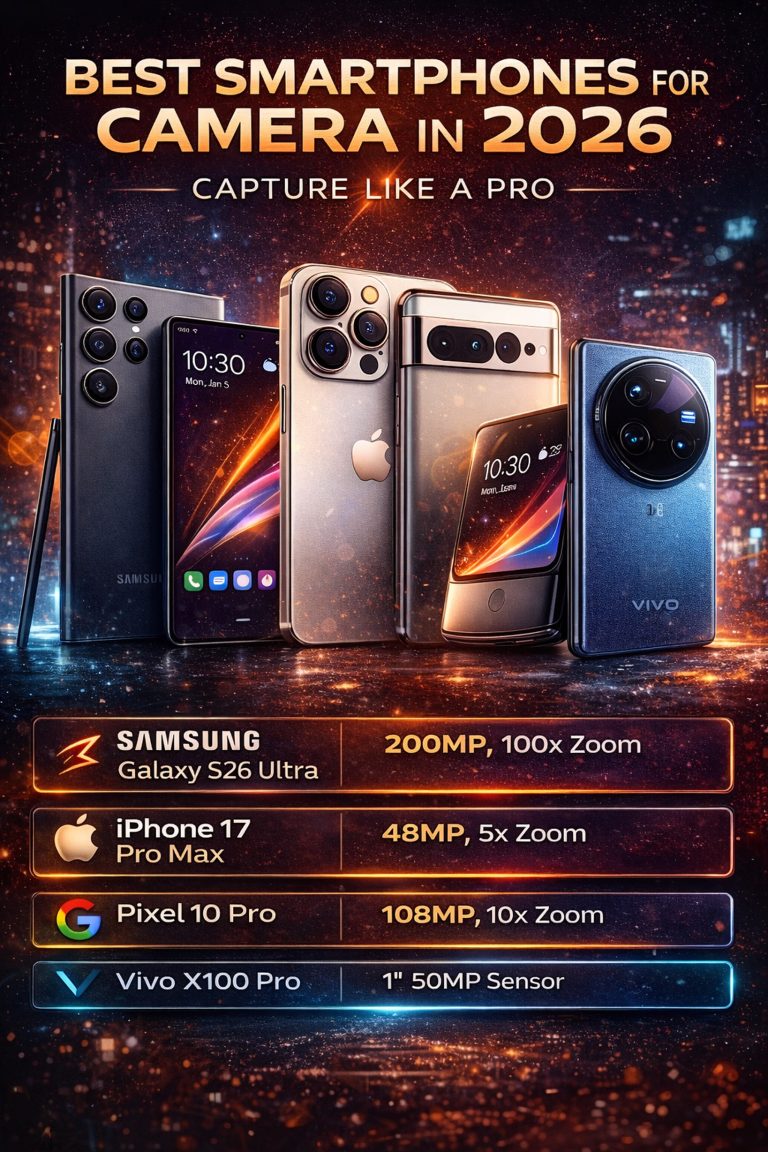
The Samsung Galaxy S28 Ultra leads hardware. Its 1-inch sensor grabs light like no other, with 200MP detail that bins clean. Periscope zoom hits 10x sharp—great for events. But ultra-wide lags in edges compared to rivals.
Apple’s iPhone 18 Pro owns computational side. AI isolates subjects flawless, turning messy shots pro. Portraits nail dynamic range; skies blend perfect with faces. Out-of-box colors please without tweaks.
For video, Google’s Pixel 11 Pro takes crown. 12-bit Log and sensor-shift deliver gimbal-smooth 8K. Stabilization locks runs; codecs flex in post. It edges Sony in everyday clips, though tele zoom softens at 10x.
- Overall Pick for Stills: Galaxy S28 Ultra—sensor power wins versatility.
- Best AI Everyday: iPhone 18 Pro—smart edits save time.
- Video Champ: Pixel 11 Pro—pro tools in pocket size.
Mix needs? Pair with apps for gaps. These three set 2026 bars high.
Conclusion: The Future of Photography is Already Here
By 2026, phone cameras mature fast. Sensors grow large, AI refines every pixel, and video hits cinema grades. You hold tools once dreamed for pros.
Pick based on your style—sensor beasts for raw power, AI aces for ease, or video kings for clips. The best fits your shots, not specs alone.
Quick tip: Clean your lens daily and shoot RAW. It unlocks max quality on any top phone. Grab one and start creating today.