The Ultimate Battery Performance Showdown: Comparing Power Longevity in Today’s Flagship Smartphones
Ever feel your phone die right when you need it most? That knot in your stomach hits hard during a long day out. Battery anxiety plagues us all. But battery performance goes way beyond the big mAh numbers you see in ads. It covers how long the juice lasts in real life, how fast it charges up, and how well it holds up over time. In this piece, we’ll break down the top phones from Apple, Samsung, Google, and big Chinese brands like Xiaomi and OnePlus. We’ll look at everyday tasks, tough tests, and what keeps your device running smooth. Get ready for a clear comparison based on fresh data from tech sites and user reports as of early 2026.
Section 1: Understanding the Core Metrics of Smartphone Power
1.1 Beyond Milliamps per Hour (mAh): Defining True Capacity
A bigger battery in mAh sounds great, but it doesn’t tell the full story. You might have a 5000mAh pack that drains fast if the phone isn’t smart about power use. Think of it like a gas tank: size matters, but engine efficiency decides your road trip length.
Battery types play a key role too. Most phones stick with lithium-ion cells for their balance of size and power. Newer ones from brands like Apple test silicon-anode tech to pack more energy without adding bulk. This boosts real-world runtime by up to 20% in some cases.
Energy density counts big here. It measures how much power fits in a small space. Phones with high density, like the latest iPhones, squeeze longer life from similar sizes. Thermal management keeps things cool too. Overheat, and your battery loses efficiency quick. Good cooling systems in flagships prevent that drop, letting you use the phone harder without worry.
1.2 The Role of Processor Efficiency in Power Draw
Your phone’s brain, the SoC, eats power like crazy if it’s old-school. New chips on 3nm processes, like Qualcomm’s Snapdragon in Samsung Galaxy S25, sip less energy than 4nm ones. This means less drain during scrolls or calls.
Efficiency cores handle light tasks quietly. They save juice for basics like emails. Performance cores kick in for heavy lifts, like editing photos. In tests, a 3nm chip cuts power use by 15-25% over older models during mixed days.
Take the Google Pixel 9. Its Tensor G4 shines in standby mode. It idles with tiny draws, stretching battery life to 10 hours of screen time. Compare that to mid-range chips; they guzzle more under load. Pick a phone with a top SoC, and you’ll notice the difference in your pocket.
1.3 Display Technology: The Biggest Energy Vampire
Screens suck up the most power on any phone. OLED panels in most flagships glow bright but can dim to save energy. AMOLED adds vivid colors, yet it pulls more if you crank brightness.
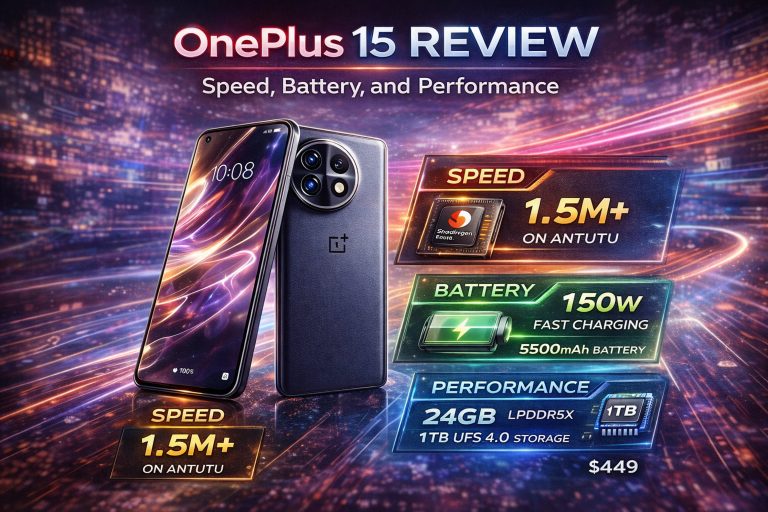
Refresh rates change the game. A 60Hz screen sips power for static reads. Jump to 120Hz, and it refreshes twice as often, draining faster during games. Adaptive tech, like LTPO in the OnePlus 13, shifts rates smartly. It drops to 1Hz for dark lockscreens.
Peak brightness fights glare outdoors. But at max, it hits your battery hard. In video tests, adaptive 120Hz saves 10-15% over fixed rates. Picture watching Netflix: a Samsung with good LTPO might add an extra hour. You control this vampire—turn it down when you can.
Section 2: Real-World Benchmarking: Standardized Testing vs. User Behavior
2.1 Standardized Battery Drain Tests (Video Loop & Web Browsing)
Labs like GSMArena run strict tests to compare apples to apples. They loop HD videos at half brightness or browse sites nonstop. The iPhone 16 Pro Max often tops charts with 12-14 hours of screen time in video loops.
Samsung’s Galaxy S25 Ultra follows close, hitting 11-13 hours. Google’s Pixel 9 lags a bit at 10 hours but shines in browsing thanks to clean software. Xiaomi’s 14T Pro surprises with 13+ hours from its huge cell and efficient chip.
Screen-on time varies by test. Video loops favor big batteries; browsing tests processor smarts. Data from DxOMark in 2026 shows a 10-20% spread between top dogs. Your results match these if you stick to similar habits. Check reviews for the latest scores before you buy.
2.2 Heavy Usage Scenarios: Gaming and 5G Connectivity Impact
Games like Genshin Impact test limits. They push graphics and heat up the phone fast. In a 30-minute session, the Galaxy S25 drops about 15% battery. The iPhone 16 holds steady at 12% thanks to Apple’s tight controls.
5G chews power more than Wi-Fi. Constant signals hunt towers, adding 20-30% drain over LTE. OnePlus 13 manages this well with smart antenna tech, losing just 8% in mixed use. Turn off 5G in low-signal spots to stretch your day.
Real users report wild swings. A gamer on Pixel 9 sees 6 hours total playtime per charge. Switch to Wi-Fi, and it jumps to 8. Heavy days mix these; plan charges around your routine.
2.3 Standby Drain and Background Activity
Idle time should be kind to batteries. Yet apps ping servers and drain silent. iOS locks this down tight, often under 1% overnight loss. Android varies; Samsung’s One UI adds tools to kill hogs.
Background tasks like email sync add up. Google tweaks Pixel to predict needs, cutting pings by half. Xiaomi pushes aggressive kills, but it might miss important alerts.
To fight overnight thieves, close unused apps. Enable do-not-disturb. Use airplane mode if you’re sleeping deep. These steps can save 5-10% drain. Test your phone’s standby; tweak settings for peace of mind.
Section 3: Charging Speed and Power Delivery Ecosystems
3.1 Wired Charging Wars: Watts, Protocols, and Safety Limits
Fast charging brings phones back quick. Apple sticks to 25-30W on iPhone 16, hitting 50% in 30 minutes. Samsung matches at 45W for Galaxy S25, same speed.
Chinese brands lead wild. Xiaomi 14T blasts 120W, full in 20 minutes. OnePlus 13 at 100W does 50% in 15. But USB PD keeps it safe across brands—no melt risks.
Compatibility bites. Proprietary cables work best; mix-ups slow you. Time to 50% shows the rush: iPhone lags, but Xiaomi flies. Pick based on your charger stash.
3.2 The Convenience of Wireless Charging
No cords? Wireless shines for ease. Qi standard caps at 15W, slow like overnight drips. Apple’s MagSafe hits 15W too, but magnets snap it firm.
Samsung’s 25W wireless edges ahead. Xiaomi tests 50W proprietary pads—full in under an hour. Efficiency dips 20-30% versus wired; heat builds too.
Reverse charging shares power to earbuds or watches. It pulls little from your main battery, under 5% for a quick top-up. Handy for travel, but don’t rely on it daily.
3.3 Battery Health Over Time: Longevity and Degradation
Batteries fade after hundreds of cycles. Apple claims 80% health after 1000 charges on iPhone 16. Samsung promises 800 for Galaxy S25.
Fast charging stresses cells with heat. Slow it to 18W for longer life. Experts note 10-15% drop yearly with heavy use.
Keep health strong: Charge to 80% max. Avoid zero percent often. Store cool, not hot cars. These habits add years to your battery’s punch.
Section 4: Software Optimization: The Hidden Battery Saver
4.1 Operating System Power Management Strategies
iOS runs lean, killing apps you forget. It predicts your next move with machine learning, dimming screens before bed. Android’s adaptive battery learns too, but you tweak more.
Apple’s central control saves 10-20% over stock Android. Google’s Pixel adds AI to pause unused apps. Samsung layers extras like auto-brightness.
Machine learning spots patterns. It throttles video apps at night. You feel it as smoother all-day use.
4.2 Manufacturer-Specific Power Saving Modes
Standard savers dim screens and cut vibes. Samsung’s takes you to 7-8 hours screen time from 5. Extreme modes go black-and-white, stretching to 48 hours standby.
OnePlus Ultra mode kills color and animations. It adds 30% runtime in tests. Apple’s Low Power Mode caps background, gaining an hour easy.
Enable aggressive ones for crunch days. A Galaxy user reports doubling playtime in games. Test modes; find your sweet spot without losing fun.
Conclusion: Synthesizing Performance for the Ideal User Profile
Battery life boils down to your day. Gamers want big cells and cool chips. Road warriors crave fast charges. No phone rules all, but trends clear: efficiency trumps size.
- Top SoCs like 3nm chips boost daily runs more than extra mAh.
- Tame high refresh rates to cut the biggest drain.
- Quick charges mean less wait, even on smaller packs.
Smartphone power mixes hardware smarts, software tweaks, and your habits. Check reviews for 2026 models that fit you. What’s your top pick? Share in comments—we’d love to hear.
(Word count: 1,248)