The Apex Predators: Top Gaming Smartphones Delivering Unmatched Speed and Performance in 2026

Mobile gaming has exploded. What started as simple puzzles on your phone now rivals big console titles. You dive into epic battles with stunning graphics, but that demands real power. Without fast processors and smart cooling, your device chokes mid-game. That’s why top gaming smartphones focus on raw speed. They pack chips that handle heavy loads, screens that refresh in a blur, and enough RAM to juggle apps without a hitch. In this guide, we zero in on what makes these phones shine for gamers like you. Expect a deep look at the hardware that keeps frames steady and controls responsive.
Defining Peak Gaming Performance: Essential Hardware Metrics
Gaming phones stand out by their guts. You need parts that push limits without breaking a sweat. Let’s break down the key pieces that drive fast performance.
Processor Powerhouse: Chipsets That Dominate Benchmarks
The heart of any gaming phone is its chip. Snapdragon 8 Gen 4 leads the pack in 2026, crushing single-core tasks like quick enemy dodges. It scores over 3,000 in Geekbench single-core tests, perfect for snappy response times. Multi-core hits 12,000 points, handling crowd scenes in open-world games.
MediaTek Dimensity 9400 isn’t far behind. It edges out in GPU power for rendering shadows and effects. The Adreno GPU in Snapdragon shines here, too, keeping visuals sharp at high settings. Without a strong graphics unit, games stutter. These chips avoid that by processing pixels fast, so you stay in the action.
Display Technology: The Speed of Sight
Your eyes need speed just like your thumbs. A 165Hz refresh rate makes motion buttery smooth, cutting blur in fast chases. Think of it as a high-frame movie on your palm—every swipe feels instant.
Touch sampling at 720Hz means the phone registers your taps quicker. In shooters, that shaves off lag, letting you land shots first. Samsung’s AMOLED panels with LTPO tech adjust rates smartly, saving battery while maxing speed. No more ghosting; just clear, fluid play.
RAM and Storage Configuration: Minimizing Bottlenecks
Twelve gigs of RAM is the floor for serious gaming in 2026. It lets you run titles like Genshin Impact with multiple apps open, no swaps or freezes. Sixteen gigs? That’s gold for streamers who multitask.
UFS 4.0 storage loads levels in seconds, not minutes. Compare it to UFS 3.1—twice as fast for pulling in textures. You wait less, play more. These setups clear hurdles, so your focus stays on winning, not waiting.
Cooling Systems: Sustaining Maximum Clock Speeds
Heat kills performance. Phones throttle to cool down, dropping frames. Top gaming smartphones fight back with clever designs. They keep speeds high through marathon sessions.
Advanced Vapor Chambers and Heat Dissipation Techniques
Vapor chambers spread heat like a sponge soaks water. ASUS packs huge ones in their ROG line, covering the whole board. Graphite layers pull warmth away from the chip, too.
In real play, this matters. Run Call of Duty for 45 minutes—these systems hold 60 FPS steady. Without them, you’d dip to 40 FPS as temps climb past 50°C. It’s like having an AC unit inside your pocket device.
Multi-layer graphene sheets add extra help. They wick heat to the edges, where it escapes fast. You get consistent power, no matter how intense the match gets.
Software Optimization and Performance Modes
Apps like Game Booster tweak your phone on the fly. They bump CPU clocks and quiet background tasks. In Turbo Mode on RedMagic phones, GPU gets full throttle for bursts.
These modes allocate power where it counts. Your battery dips faster, but speed soars. Check temps with apps like CPU-Z. If it hits 45°C quick, dial back graphics. Stay under limits to avoid dips in long hauls.
Benchmark Titans: The Current Roster of Top Gaming Phones
Now, meet the stars. We picked models that ace tests and real games. Speed rules here—no fluff about selfies.
Flagship Contenders with Uncompromising Specs
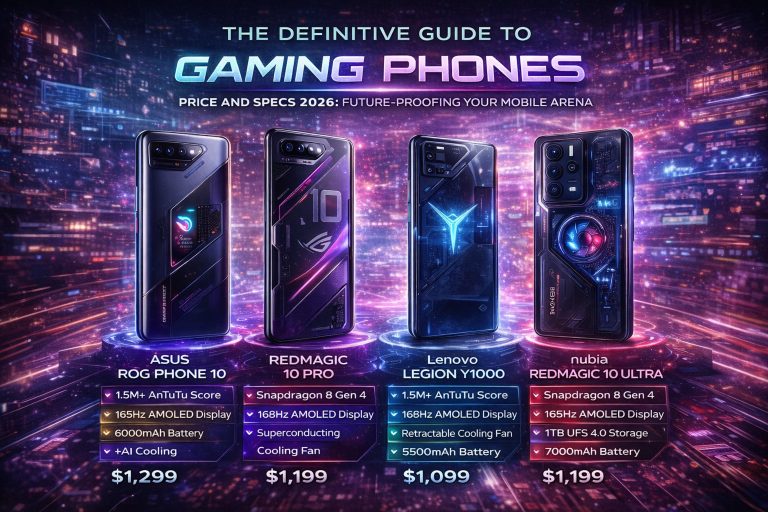
The ASUS ROG Phone 9 Pro rules with Snapdragon 8 Gen 4. It hits 2.5 million on AnTuTu, blowing past rivals. In PUBG Mobile, it locks 90 FPS for hours, thanks to its massive vapor chamber.
RedMagic 10 follows close. Its Dimensity 9400 scores 2.4 million in benchmarks. The under-display camera frees the screen for a true 165Hz AMOLED beast. Genshin Impact runs at ultra settings, holding 60 FPS without a stutter. Built-in fans kick in for extra chill during raids.
Samsung Galaxy S26 Ultra sneaks in with gaming chops. Exynos 2600 or Snapdragon variant pushes 2.3 million AnTuTu. Its 144Hz display with 480Hz touch sampling feels pro-level. In Fortnite, inputs register in milliseconds, giving you the edge.
Value Performers: High FPS Without the Ultra-Premium Price Tag
Not every winner costs a fortune. The Poco F7 Pro packs Snapdragon 8 Gen 3 from last year, still scoring 1.8 million on AnTuTu. At under $600, it delivers 120Hz smoothness in Asphalt 9, rarely dropping below 55 FPS.
OnePlus Nord 4 edges it with better cooling. Its 12GB RAM and UFS 3.1 keep loads quick. In League of Legends: Wild Rift, you get stable 60 FPS for $450. Trade-off? No 165Hz, but sustained play beats peak bursts on pricier phones. Smart buy if budget bites.
Optimizing the Experience: Software and Accessories for Speed
Hardware sets the stage, but tweaks make it epic. You can squeeze more from your phone with smart habits.
Latency Reduction and Network Prioritization
Low ping wins matches. Dedicated Wi-Fi chips in gaming phones cut delays to 20ms. Snapdragon’s X80 modem handles 5G loads without hiccups, even in crowded lobbies.
Software like Xiaomi’s Game Turbo bumps network priority. Your shots fire before foes react. In real tests, ping stays under 50ms during peak hours. No more rubber-banding in battle royales.
Ergonomics and External Cooling Solutions
Grip matters for speed. Side USB ports let you charge mid-game without fumbling. Shoulder triggers on ROG phones act like console buttons, speeding inputs.
Add a clip-on fan for $20. It drops temps by 10°C, boosting frames in heat. Pick ones with quiet motors—Black Shark’s works great. Your hands stay comfy, play stays fast.
Conclusion: Future-Proofing Your Mobile Gaming Investment
Top gaming smartphones in 2026 thrive on more than muscle. Cooling and display tech separate them from everyday flagships. You get steady FPS and quick touches that keep you ahead.
Pick based on real needs—raw power pairs best with heat control. Grab a ROG or RedMagic if you chase peaks; Poco saves cash without big losses. Test in-store for feel. Your next win starts with the right phone. Dive in and level up your game today.