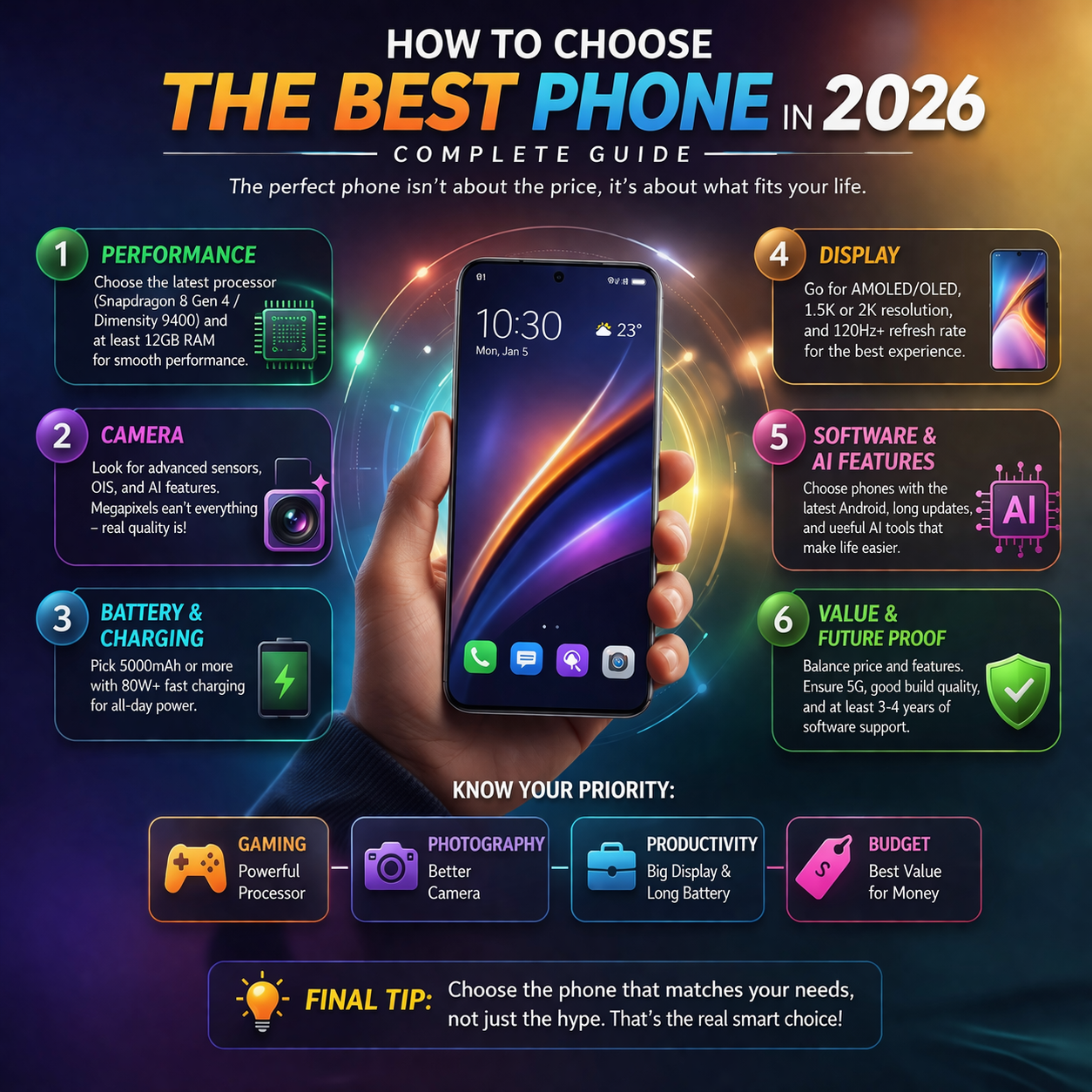
How to Choose the Best Phone in 2026 (Complete Guide)
Smartphones change fast. By 2026, AI helps cameras think on their own, and batteries last days on one charge. But the latest model won’t fit everyone. You might waste money on features you skip.
This guide shows you how to pick the right phone. It breaks down your needs, checks key parts, and spots real value. Forget brand hype. Focus on what works for you.
Defining Your 2026 Smartphone Needs and Budget
Think about your daily phone use first. Do you game for hours? Or just check texts? Match the device to your life, not ads.
Budget Tiers and Expected Value Proposition for 2026
Prices split into three groups this year. Entry-level phones cost under $400. They offer solid basics like 6GB RAM and 120Hz screens.
Mid-range picks run $400 to $800. Expect 8GB RAM, fast charging, and good cameras. Premium flagships top $1,000. They pack top chips and extra storage.
At entry level, you get 128GB space and basic 5G. Mid-range adds wireless charging and better video. Premium brings foldable screens or pro audio. Set your limit early.
- Entry-level: Basic tasks, long battery.
- Mid-range: Balance for most folks.
- Premium: Power for pros.
Try this quick check. List must-haves like camera quality. Then note your top spend. This matrix helps: Rows for needs (battery, speed). Columns for budgets (low, mid, high). Mark fits. It narrows choices fast.
Usage Profiles: Power User, Creator, or Casual Communicator?
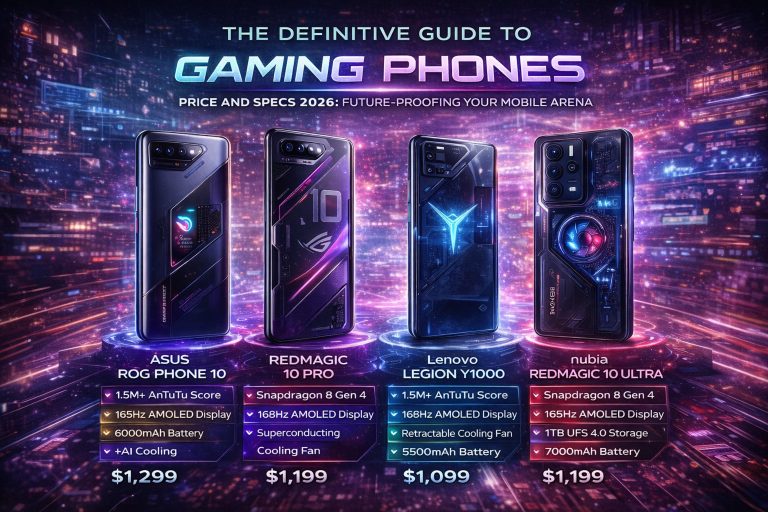
Know your type. Power users run apps and games nonstop. They need strong cooling and 12GB RAM or more.
Creators shoot videos or edit photos. Top cameras and quick storage matter most. Casual users want easy calls and long life. Simple interfaces suit them.
Take a gamer. They pick a phone with a big vapor chamber for heat control. An older person might choose big icons and voice aid. What fits you? Test apps you use daily. See what drains power or lags.
Operating System Stalemate: iOS vs. Android Evolution
iOS 20 and Android 17 lead in 2026. Both run AI tasks right on the phone. No cloud needed for quick replies or photo edits.
iOS shines in smooth apps and Apple gear links. Android offers more tweaks and cheaper options. Privacy rules push local AI. iOS locks data tight. Android lets you pick apps freely.
Pick based on habits. Apple fans stay in one world. Android users mix brands. Test both in stores. See which feels right.
The Core Hardware Battleground: Performance and Longevity
Inside counts most. Chips and batteries decide if your phone lasts years. Look past shiny outsides.
Chipsets and On-Device AI Processing Power
New chips use 2nm tech. They cut power use by 20% from 2025. AI runs local, so edits happen in seconds.
Benchmarks show 30% speed jumps. Snapdragon or A-series lead. They handle big files without heat spikes. For you, this means no waits on maps or chats.
Compare scores on sites like Geekbench. Higher means better multitasking. AI aids daily tasks, like smart summaries.
RAM, Storage, and Future-Proofing Connectivity (Wi-Fi 7/8)
Aim for 8GB RAM minimum. It keeps tabs open without slows. 2026 OS need it for AI tricks.
UFS 4.0 storage loads apps in a blink. Get 256GB base to store photos. Wi-Fi 7 hits 46Gbps speeds. It beats old nets for downloads.
5G Advanced covers most spots now. Check carrier bands. More means wider reach. Test your home Wi-Fi. Slow? Upgrade to Wi-Fi 7 phones.
Battery Technology and Charging Standards Revolution
Silicon batteries hit 5,000mAh easy. They hold charge 50% longer than old lithium. Real use? Two days for light tasks.
Fast charge at 100W fills in 20 minutes. Qi2 wireless does 15W standard. No more cords everywhere.
Don’t trust mAh alone. Check tests from labs like DXOMARK. They show hours of screen time. Pair with efficient chips for best life. Heat kills batteries. Look for good cooling.
Visual Experience: Displays and Advanced Camera Systems
Your eyes meet the screen first. Cameras capture moments. Get these right for joy.
Display Technology: Brightness, Refresh Rates, and Durability
LTPO OLED rules 2026. They save power and hit 2,000 nits bright. Sunlight? No glare.
120Hz feels smooth for scrolls. 144Hz helps gamers dodge lags. Durability? Gorilla Glass 7 resists scratches twice as well.
Daily? 120Hz enough. Games? Go higher. Drop tests show foldables last longer now.
Computational Photography vs. Sensor Supremacy
Big sensors beat megapixel counts. 50MP with AI fixes low light. No more grainy night shots.
Video hits 8K at 60fps. Cinematic blur adds pro looks. AI stacks shots for sharp details.
Experts say sensor size trumps numbers. A DXOMARK pro notes: “Bigger pixels catch more light.” Test samples online. See real colors.
Form Factors: Foldables, Rollables, and Traditional Slabs
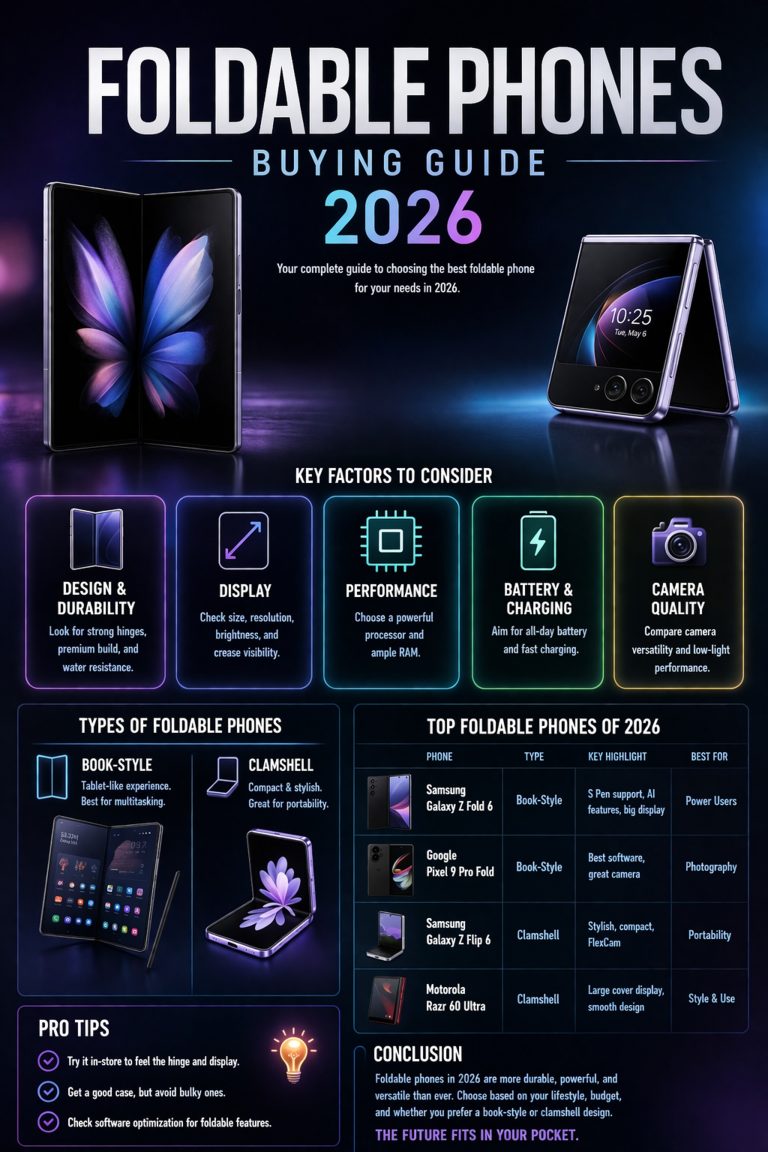
Foldables mature. Hinges last 200,000 folds. Screens resist creases better.
Rollables expand like scrolls. But they cost more and break easier. Slabs stay tough and cheap.
Need portability? Slab wins. Multitask? Foldable. Check drop ratings. IP68 water proof all around.
Ecosystem Integration and Security Essentials
Your phone links to life. It guards data too. These tie it together.
Seamless Ecosystem Integration (Apple vs. Google vs. Samsung)
Apple weaves iPhone with Watch and Mac. Hand off calls mid-device. Smooth.
Google Pixel ties to Nest and Chrome. Android shares files fast. Samsung adds Galaxy tabs for big screens.
Pick your circle. Apple for tight control. Google for open web. Samsung for extras like DeX mode.
Security Updates, Lifespan Guarantees, and Repairability Scores
Seven years of updates standard. Fixes bugs and adds features. Old phones stay safe.
Right to Repair scores from iFixit rate ease. High means cheap fixes. Samsung and Google score 7/10 now.
Find commitments on maker sites. Look for update logs. Easy swaps save cash long-term.
- Check: Years of OS upgrades.
- Score: Parts access.
- Tip: Read forums for real fix costs.
Biometrics and Privacy Features for 2026
Under-screen prints scan fast. 3D face ID works in dark. Both beat codes.
OS force app permissions. AI spots threats quick. No data leaks easy.
Test in store. Does it unlock wet? Privacy toggles hide location. Key for safe use.
Making the Final Purchase Decision
Pull it all in. Use facts to choose. Skip the rush.
Avoiding Hype: Identifying True Innovation vs. Gimmicks
Real wins cut power or boost speed 20%. Gimmicks? Tiny camera bumps.
Ask: Does it fix my pains? Like longer battery. Read reviews from sites like CNET. They test claims.
Hype fades. Core tech lasts. Weigh needs against specs.
The Second-Hand Market and Trade-In Value Analysis
Good builds hold value. Phones with long support sell for 60% after two years.
Trade-ins from Apple give $500 back on old models. Check sites like Swappa for prices.
Factor total cost. New premium? High upfront. Mid-range used? Smart save. Build quality drives resale.
Conclusion: Your Personalized Path to the Perfect 2026 Phone
Start with your needs. Then match specs. This way, you get a phone that fits.
Top factors? Strong AI chips, better batteries, and solid software updates. They keep it fresh for years.
Use this guide now. List your musts. Shop smart. Your next phone shapes daily life. Pick wise.