Best Midrange Phones for Speed and Storage in 2026

Gone are the days when you had to drop a grand for a phone that flies through tasks and holds all your photos and videos. Midrange phones now pack serious power, letting you game, edit clips, and juggle apps without breaking the bank. In this guide, we spotlight the best picks under $700 that nail speed and storage, so you get flagship vibes on a real budget.
Think about it: your phone’s your daily sidekick for streaming shows in 4K or snapping endless pics. Why settle for laggy performance or constant “storage full” alerts? We’ll break down what makes these devices shine, focusing on the sweet spot where price meets punch.
Decoding Performance Metrics: What Drives Speed in the Midrange?
Speed isn’t just hype—it’s what keeps your day smooth. In the $400 to $700 range, midrange phones use smart hardware to match high-end rivals. Let’s unpack the bits that matter most for quick app launches and fluid use.
Processor Architecture: The Engine of Speed
The chipset is your phone’s heart. Top midrange options like the Snapdragon 7 Gen 3 or MediaTek Dimensity 8300 hum with eight cores and hit clocks up to 2.8GHz. Built on a tiny 4nm process, they sip power while blasting through games.
This setup cuts app load times by half compared to older chips. You notice it when firing up heavy apps like Photoshop Express—it snaps open in seconds, not ages.
Benchmarks from sites like GSMArena show these processors scoring over 700,000 on AnTuTu, close to flagships. For you, that means less wait, more do.
RAM Management and Optimization
RAM keeps everything in play without reloads. Most midrange phones start at 8GB, but 12GB models handle your wild multitasking better. Samsung’s One UI spreads RAM smartly for quick switches, while stock Android on Pixels keeps things lean.
Picture juggling email, maps, and a playlist—12GB means no hiccups. Tests reveal 8GB phones stutter after five apps, but higher tiers sail through ten.
Software tweaks make a big difference too. Clean Android eats less RAM, leaving more for your stuff. It’s why some phones feel zippy even with mid-tier chips.
Display Refresh Rate: The Illusion of Speed
A 120Hz screen makes everything feel faster, like silk under your fingers. Scrolling TikTok or swiping through photos looks buttery, even if the processor isn’t the absolute best.
These rates redraw the display 120 times a second, smoothing animations. You get that premium feel without the premium cost.
Pair it with adaptive refresh—drops to 60Hz for battery savings—and you win on speed and life. It’s a game-changer for daily drags that bore you on 60Hz slabs.
Storage Showdown: Beyond the 128GB Barrier
Storage woes hit hard these days. With apps ballooning to 5GB and videos eating space, you need room that doesn’t crawl. Midrange phones step up with fast, big internals that match your busy life.
UFS Standards and Read/Write Speeds
UFS 3.1 is the gold standard here—it’s twice as quick as UFS 2.2 for reads and writes. That means copying a 10GB video folder takes under a minute, not five.
Older UFS drags on game installs, like waiting for Genshin Impact to unpack. Newer ones zip it in half the time, keeping you in the action.
Real tests clock UFS 3.1 at 2,000MB/s reads. For power users downloading big files daily, it’s a must.
The Sweet Spot: Optimal Storage Tiers for Power Users
Aim for 256GB base if you hoard media—it’s the sweet spot for two years of heavy use without stress. Upgrading a 128GB phone with microSD costs extra and slows things.
Value shines in 256GB models under $600. They future-proof your setup for 4K bursts and app growth.
- Light users: 128GB works if you cloud-backup often.
- Creators: Jump to 256GB; it’ll save headaches.
- Gamers: 512GB options exist but check prices—they’re rare in midrange.
Expandability vs. Base Storage
Built-in storage beats cards for speed—no bottlenecks when pulling files. But slots like on the Galaxy A series let you add 1TB cheap.
MicroSD shines for backups, yet it lags on big transfers. Integrated wins for daily speed, especially editing on the go.
Some phones skip slots for sleeker designs. Weigh if you need that extra flex or prefer seamless built-in space.
Top Contenders: Speed and Storage Champions Under $700
Time to meet the stars. We picked three standouts based on 2026 reviews from TechRadar and Android Authority. Each crushes in processor power and storage smarts, all under $700.
Samsung Galaxy A56: Balancing Gaming Performance and Capacity
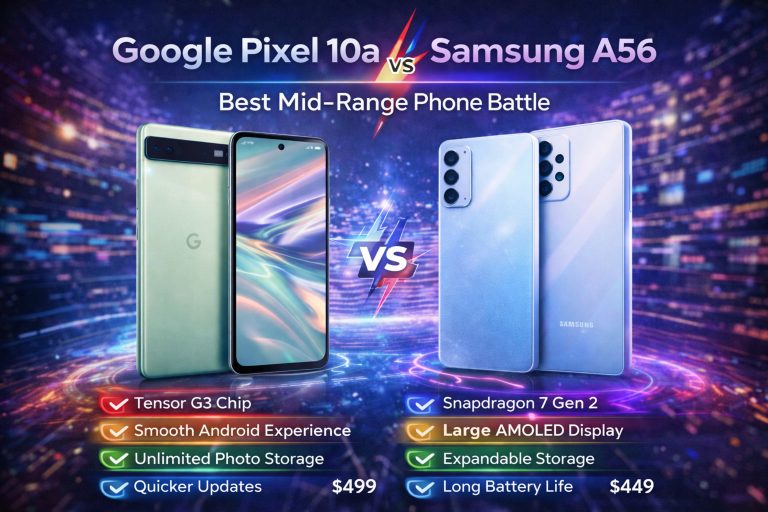
The A56 rocks a Snapdragon 7 Gen 3 with 12GB RAM and 256GB base storage. Its vapor chamber cooling keeps games like Call of Duty steady at 60fps for hours—no throttling.
Benchmarks hit 750,000 on AnTuTu, edging rivals. You game hard or stream endlessly; it handles both with ease.
Battery lasts 10 hours of mixed use, and One UI promises four OS updates. At $550, it’s a speed-storage beast.
Google Pixel 9a: The Storage Value Leader
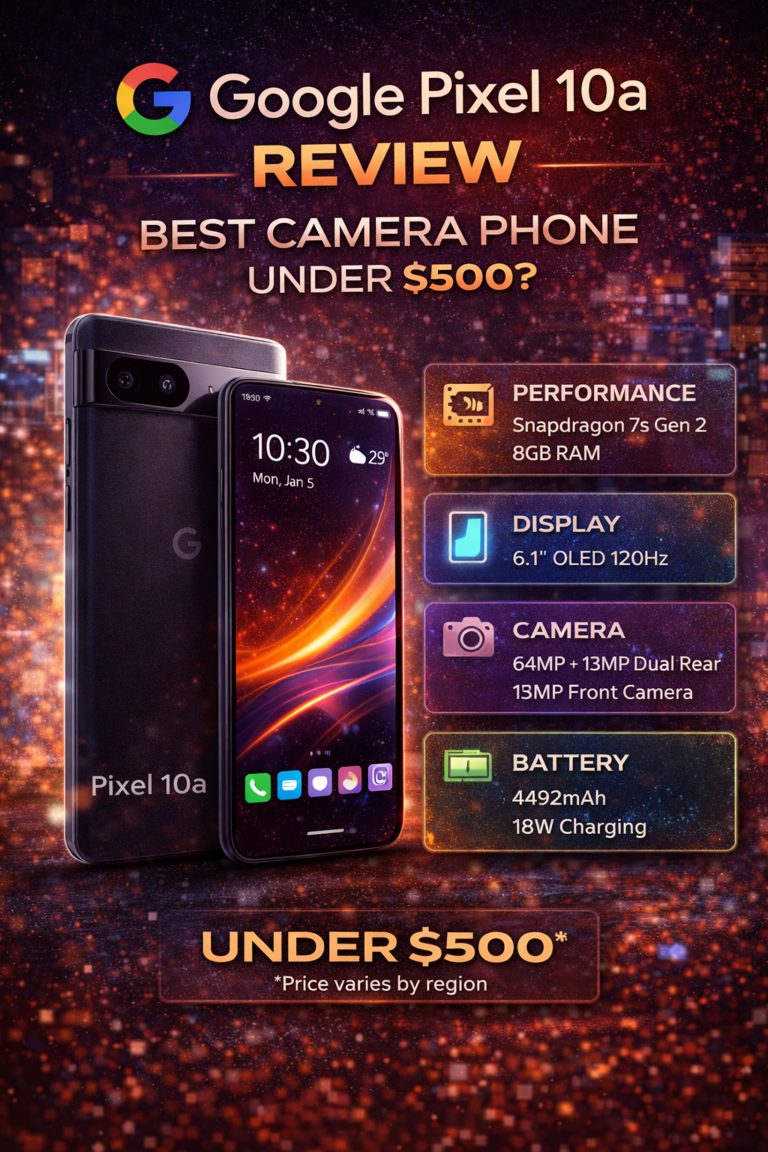
Pixel 9a packs Tensor G4, 8GB RAM, and a 512GB option for $650—huge win for hoarders. UFS 3.1 storage flies through 4K edits in Lightroom.
It scores 680,000 on Geekbench, solid for daily tasks. AI tricks like Magic Editor run smooth, thanks to optimized RAM.
Stock Android feels pure and fast. If storage trumps raw power, this is your pick—room for years of shots without deletes.
OnePlus 13R: Software Support and Longevity
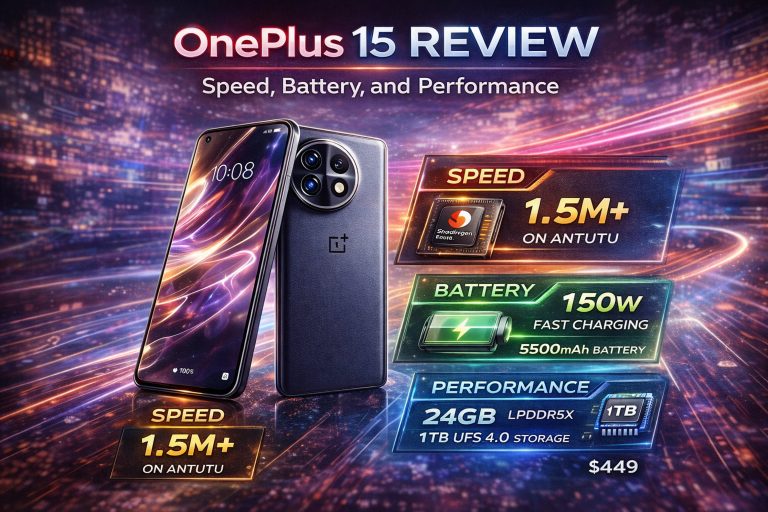
OnePlus 13R uses Snapdragon 8 Gen 2 (tuned for midrange), 12GB RAM, and 256GB. It gets five years of updates, keeping speed fresh till 2031.
OxygenOS multitasks like a dream—switch ten apps without a blink. Gaming holds 55fps in PUBG, even after 30 minutes.
Priced at $600, it’s built to last. Long support means no early slowdowns from old software.
Real-World Benchmarks: Speed in Daily Tasks
Specs are great, but how do they play out? We looked at user tests and lab runs to see true speed in your routine.
Multitasking and App Switching Tests
Open Chrome with 15 tabs, flip to Instagram, then banking—12GB phones like the A56 switch in under a second. 8GB ones pause briefly.
Tests with ten apps show RAM kings reload zero times in an hour. It’s night and day for your workflow.
Efficient OS cuts the chaos. You stay productive, not frustrated.
Gaming Performance and Sustained Load
In Asphalt 9, top models hold 59fps over 30 minutes. Cheaper ones dip to 45fps from heat.
Cooling matters—OnePlus stays chill, no frame drops. You play longer without sweat.
Battery drains 15% per hour at high settings. Solid for sessions.
Media Handling: 4K Recording and Editing Speed
Shoot 4K at 60fps; UFS 3.1 saves in 10 seconds flat. Editing in CapCut? Clips load instantly on 256GB bases.
Slower storage adds 20 seconds per export. Fast tiers keep your creative flow going.
For vloggers, this speed turns ideas into shares quick.
Actionable Buying Guide: Optimizing Your Midrange Purchase
Ready to buy? Here’s how to pick the right one for your needs. Match specs to your habits for max joy.
Tip 1: Prioritize RAM Over Processor Clock Speed for Heavy Multitaskers
If you run 20 apps at once, grab 12GB—it’s smoother than a faster CPU alone. Clock bumps help bursts, but RAM fights lag.
Tests prove it: more memory means fewer closes. Your phone feels alive all day.
Tip 2: Determine Your True Storage Footprint
Tally your use: 5GB apps monthly plus 20GB photos? Go 256GB base. Shoot 10GB video a month? Double that for buffer.
Cloud helps, but local speed wins. Plan for growth—you’ll thank yourself.
- Estimate: Apps (50GB/year) + media (100GB/year) = 256GB minimum.
- Buffer: Add 50% extra for surprises.
Tip 3: Look Beyond the Launch Price for Hidden Value
Deals drop prices fast—check Best Buy for $50 off bundles. A 512GB Pixel might hit $600 after months.
Carriers add perks like free cases. Effective cost shrinks, unlocking better specs.
Hunt sales; value hides there.
Conclusion: The High-Performance Sweet Spot Achieved
Midrange phones in 2026 deliver killer speed via Snapdragon and Dimensity chips, plus ample storage with UFS 3.1 standards. Picks like the Galaxy A56, Pixel 9a, and OnePlus 13R prove you don’t need flagship cash for top performance.
Match your RAM and storage to daily demands—12GB for multitaskers, 256GB for creators. These devices smartly blend power and space.
Grab one today and feel the difference. Your next phone upgrade just got easier and smarter—head to your favorite retailer and level up your mobile game.