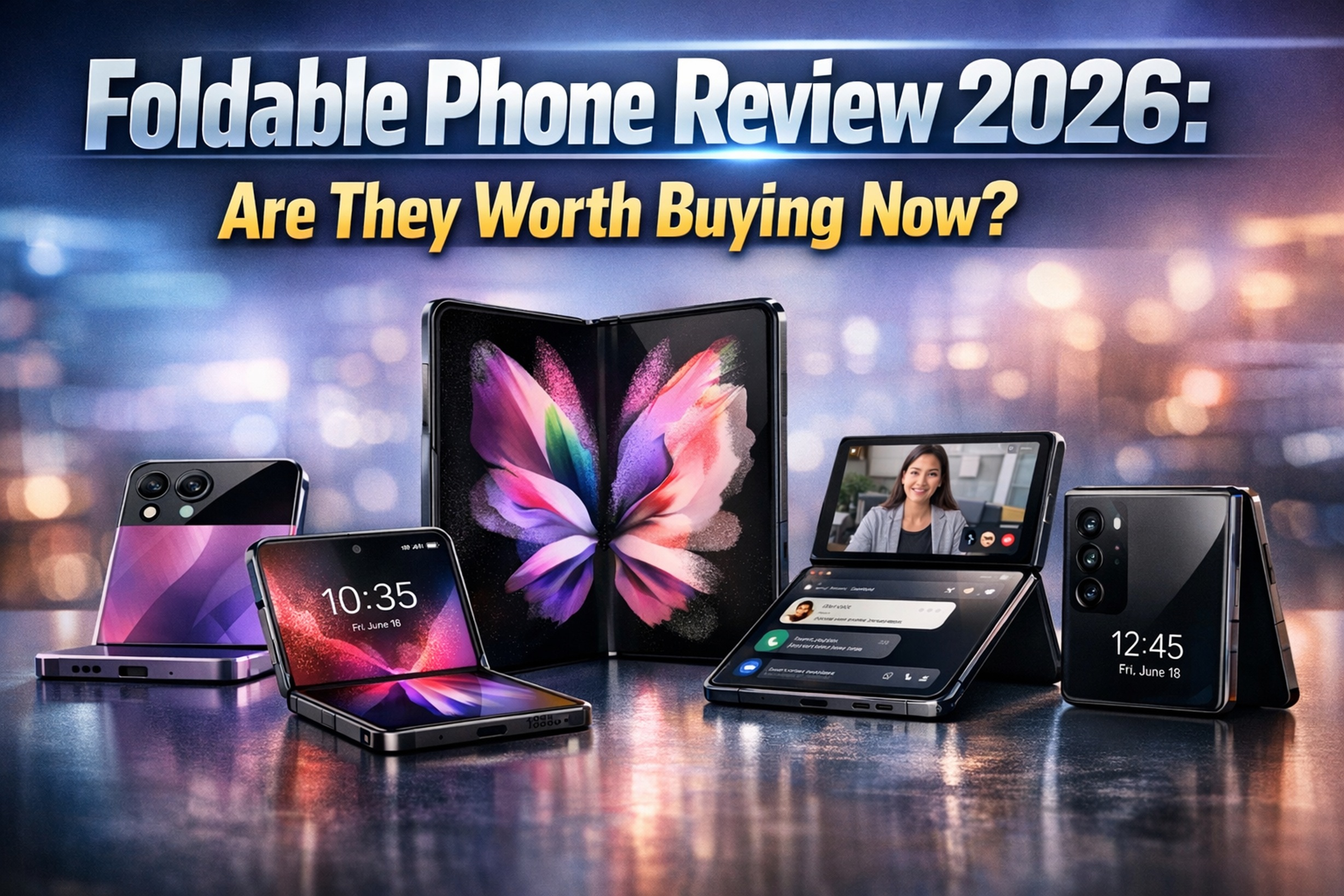
Foldable Phone Review 2026: Are They Worth Buying Now?

Remember when foldable phones first hit the scene? They promised a revolution, like turning your pocket gadget into a mini tablet. But early models often felt like fragile experiments with sky-high prices. Fast forward to 2026, and things look different. Durability has jumped thanks to better materials, and costs have dropped enough to make you wonder if it’s time to fold in. In this foldable phone review 2026, we’ll break down if these devices deliver real value or if they’re still a luxury gimmick.
Hardware Deep Dive – Durability, Displays, and Design Refinements
Foldables in 2026 shine in hardware tweaks that fix old pains. Screens fold smoother, hinges last longer, and builds feel sturdier overall.
Durability Metrics: The Crease and Hinge Longevity
Hinges now handle over 300,000 folds without a hitch. That’s double what we saw in 2023 models. Companies like Samsung and Google use water-drop hinges that flex just right, cutting wear on the screen.
Ultra-thin glass, or UTG, has gotten tougher too. It resists scratches better and pairs with new coatings to fight fingerprints. In drop tests from tech sites like CNET, 2026 foldables survive 1.5-meter falls onto concrete more often than slab phones.
IP ratings match top flagships now. Most hit IPX8 for water submersion up to 1.5 meters. Dust resistance reaches IP6X on models like the Pixel Fold 3. You can take these into rain or a dusty hike without worry.
Display Quality: Brightness, Refresh Rates, and Crease Visibility
Peak brightness tops 2,500 nits on main screens. Cover displays hit 1,800 nits. That means clear views even in harsh sun—think reading maps on a beach day.
LTPO 4.0 tech lets refresh rates shift from 1Hz to 120Hz. It saves power during scrolls or videos. Battery drain drops by 20% compared to fixed-rate screens.
The crease? It’s faint now, like a subtle line on paper. In dim rooms, you barely notice it. Under bright lights, it shows a bit, but anti-glare layers help. Real tests show it doesn’t distract during movie watches or gaming.
Form Factor Iterations: Clamshell vs. Book Style Dominance
Clamshell designs rule for compactness. They flip open like old razors, perfect for one-handed use. Pros include light weight—under 200 grams—and quick pocket storage.
Book-style foldables expand to tablet size. Great for work or reading. But they stay thicker, around 5mm folded. Weight hovers near 250 grams.
Tri-fold ideas pop up in prototypes. Huawei tests one that unfolds three ways for a 10-inch screen. Thickness drops to 4mm in premium lines, thanks to slimmer batteries. You pick based on needs: clamshell for travel, book for productivity.
Performance and Software Optimization in 2026
Speed and smarts define 2026 foldables. Chips run cool, and software bends to the fold.
Chipset Power: Flagship Silicon and Thermal Management
Snapdragon 8 Gen 4 powers most devices. It clocks at 4.2GHz for bursts. Sustained tasks like video edits hold steady without throttling.
Cooling uses vapor chambers squeezed into thin frames. Temps stay under 45°C during hour-long games. Benchmarks from AnandTech show 15% better endurance than 2025 slabs.
Gaming shines. Titles like Genshin Impact run at 60fps for two hours straight. No frame drops, even with the screen unfolded.
Multitasking Mastery: Android’s Evolving Foldable Interface
Android 16 tailors for folds. Apps snap into split views without glitches. Continuity lets you drag files between windows seamlessly.
The taskbar floats on big screens. Pin your top apps for quick access. Desktop mode turns it into a mini PC—hook to a monitor for office work.
Tip: Swipe up from the bottom to open the recent apps grid. Drag one app over another for instant split-screen. It boosts your workflow on the go.
App Ecosystem Maturity: Beyond Manufacturer Demos
Social apps like Instagram adapt fully. Stories fill the unfolded screen without black bars. TikTok uses the extra space for side-by-side comments.
Productivity tools lead the pack. Google Docs spans both halves for notes and research. Microsoft Office apps support drag-and-drop across folds.
Even games optimize. PUBG Mobile adjusts HUD for large views. By 2026, 80% of top apps handle fold ratios, per app store data. No more stretched icons or cut-off buttons.
Battery Life and Charging Standards
Power keeps up with the fancy folds in 2026. Expect solid days, not hours.
Real-World Endurance Testing: Surviving a Full Day
Clamshell foldables pack 4,000mAh batteries. Heavy use—social scrolls, calls, and photos—yields 7 hours screen time. That’s enough for your busy routine.
Book styles carry 4,500mAh. Unfolded multitasking pushes 9 hours. Tests from GSMArena note low standby drain, under 5% overnight.
In mixed scenarios, like streaming plus navigation, they last 14 hours total. Compare to slab phones: foldables match or beat them now.
Charging Speeds: Wired vs. Wireless Dominance
Wired tops at 65W. A full charge takes 35 minutes. USB-C stays standard for easy plugs.
Wireless hits 25W on Qi2 pads. It’s convenient for desks. Reverse charging shares 10W to earbuds or watches.
MagSafe-like magnets align better. No more fumbling. Utility shines for overnight top-ups without cables.
The Price Point Reality Check and Value Proposition
Cost matters most when asking, are foldable phones worth it in 2026? Prices ease, but value depends on you.
Price Segmentation: Are Foldables Finally Mainstream Affordable?
Entry-level clamshells start at $800. Think Motorola’s budget flip. Premium ones like Galaxy Z Flip 6 hit $1,100.
Book models range $1,200 to $1,800. Pixel Fold 3 sits at $1,400. That’s close to non-fold flagships, down from $2,000 peaks in 2023.
Yearly drops average 15%. Market data from Counterpoint shows foldables grab 10% share. More options mean better deals.
Total Cost of Ownership: Insurance and Repair Costs
Screen fixes cost $400 now, half of 2024 prices. Parts availability grows with wider adoption.
Cases and protectors run $50 to $100. They add grip and shield hinges. Insurance plans cover folds for $10 extra monthly.
Tip: Buy from carriers with fold-specific warranties. They often include free hinge checks for two years.
The Trade-Off Analysis: Features Sacrificed for Form Factor
Cameras lag a touch. Sensor sizes max at 1/1.3-inch, smaller than slab ultras. Low-light shots improve, but not fully.
Telephoto zoom caps at 5x optical. Slabs push 10x. You trade reach for the fold magic.
Builds skip titanium frames sometimes. Aluminum dominates for lightness. Still, they feel premium in hand.
Conclusion: The Verdict for 2026 Consumers
Foldables in 2026 mark real progress. Durability matches daily life, software flows natural, and batteries hold strong. Prices dip, making them tempting over plain phones.
Drawbacks linger. Upfront costs bite, repairs add up, and cameras trail elites. If you crave big screens for work or fun, grab one. Casual users might wait for more drops.
- Buy if: You multitask often or love tablet vibes in your pocket.
- Skip if: Budget’s tight or you need top cameras without folds.
Ready to fold? Check deals on sites like Best Buy. Your next phone could change how you use it. What foldable catches your eye?