iPhone 17 vs Samsung Galaxy S26: Which Is Better?
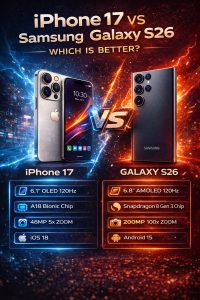
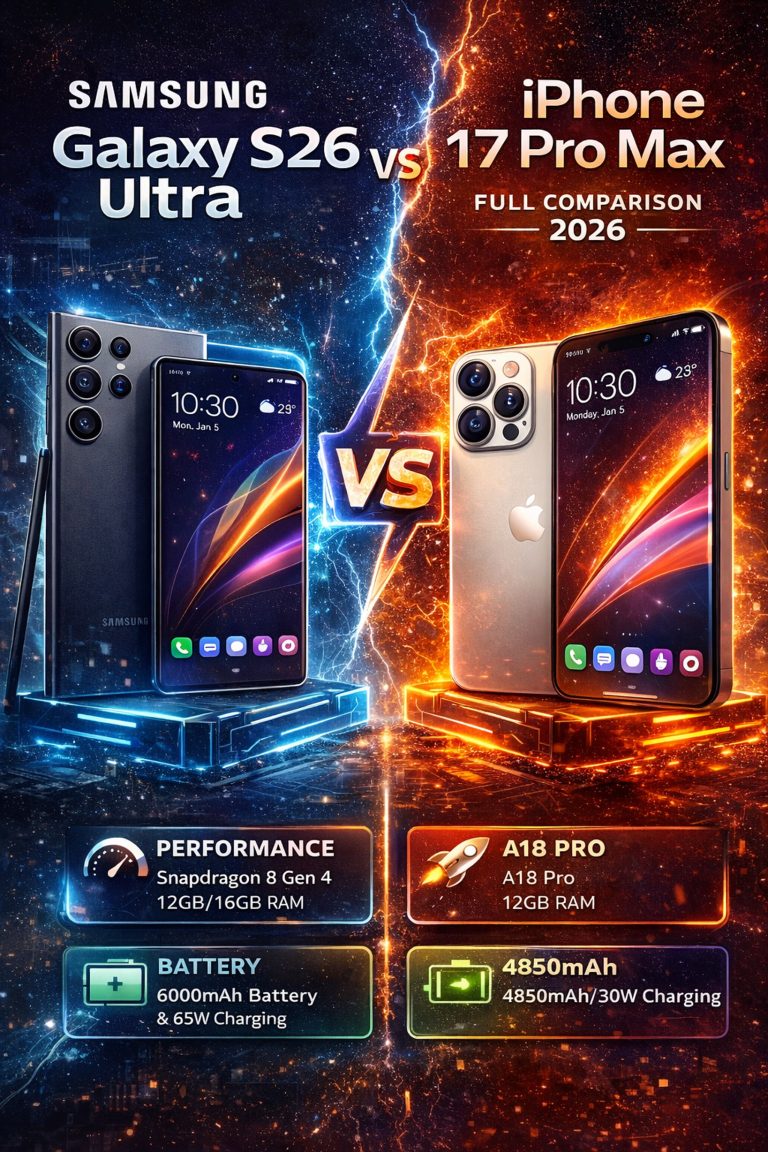
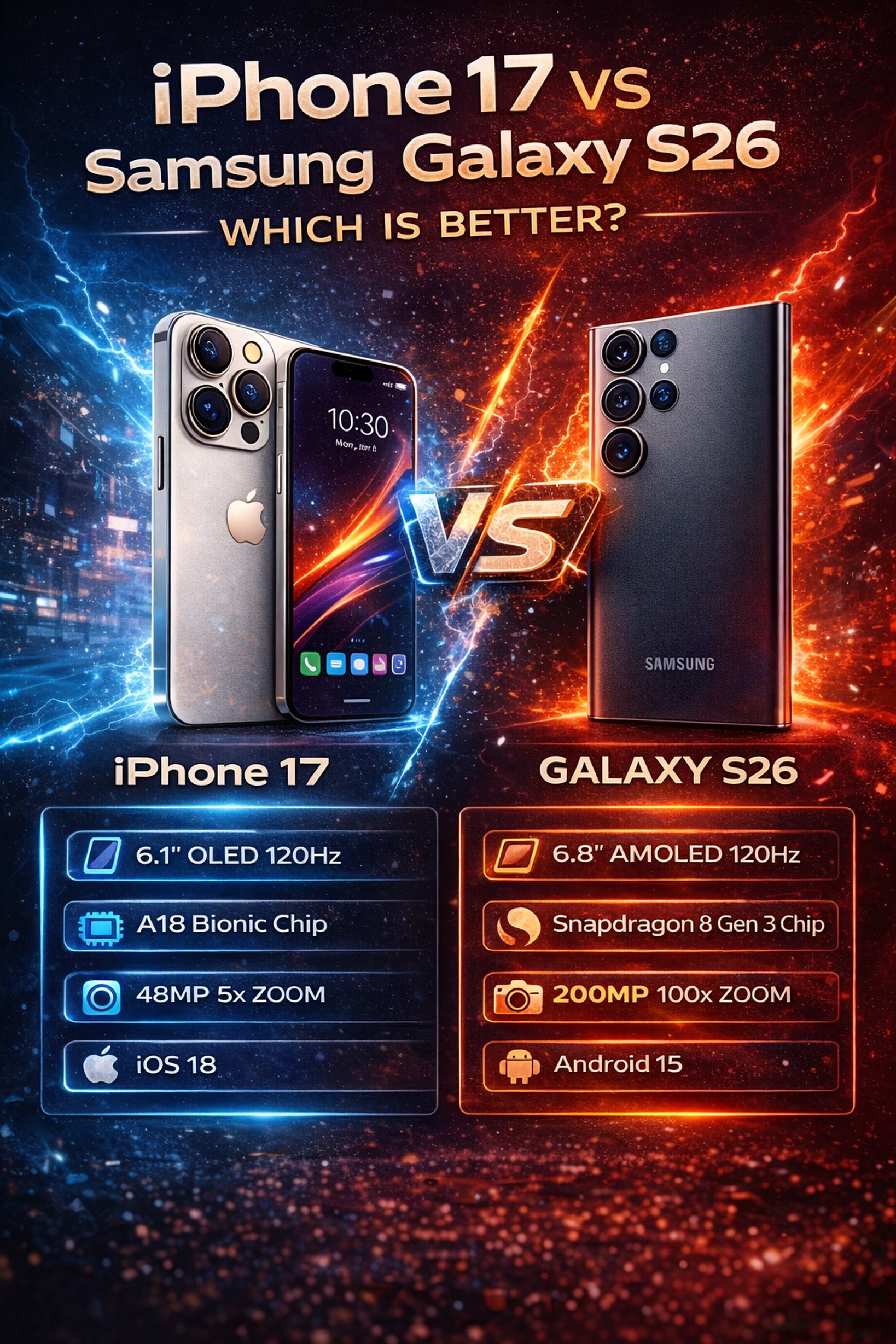
Picture this: two titans of tech clash in a ring where screens glow brighter than spotlights. The iPhone 17 and Samsung Galaxy S26 stand ready to dominate your pocket in 2026. Fans buzz with excitement as leaks hint at game-changing upgrades. Apple pushes boundaries with tight hardware-software ties, while Samsung bets big on versatility. This showdown breaks down the hype. You’ll get clear facts to pick your next phone without regret.
Performance and Chipset Wars: Raw Power Comparison
Speed defines the best phones. The iPhone 17 packs Apple’s latest A-series chip. Rumors point to a 2nm process that squeezes more power from less space. Expect single-core scores to top 3,500 on Geekbench, beating rivals in quick tasks like app launches.
Samsung’s Galaxy S26 likely uses a Snapdragon 8 Gen 5 or Exynos match. This chip shines in multi-core tests, hitting around 12,000 points. It handles heavy loads without throttling fast. Gamers love how it keeps frames steady during long sessions.
Both chips promise AI boosts. Apple’s Neural Engine processes tasks on-device for privacy. Samsung spreads the load across cores for smoother multitasking. In daily use, the iPhone feels snappier for one-off jobs. The Galaxy edges out in juggling apps or editing videos.
A-Series Chip (iPhone 17) Expected Benchmarks and Efficiency
Apple’s silicon always leads in efficiency. The iPhone 17’s chip might feature 6 high-performance cores and 4 efficient ones. This setup saves battery during light use. Leaks suggest GPU improvements for better graphics in games like Genshin Impact.
Single-core strength means faster photo edits or web scrolling. Past iPhones scored high here; expect the 17 to push further. Heat stays low, so it won’t slow down after hours of use.
You notice this in real life. Opening apps feels instant. Battery lasts longer on the same charge compared to bulkier rivals.
Snapdragon X-Series or Equivalent (Galaxy S26) Multi-Core Might
Samsung focuses on endurance. The Galaxy S26’s processor could include advanced cooling with vapor chambers. This keeps performance high during 4K video renders or AR apps.
Multi-core power excels in benchmarks like Cinebench. Scores might reach 1,200 points, ideal for creators. Thermal tweaks from last year carry over, reducing lag in hot climates.
For you, this means reliable speed all day. Stream Netflix while charging? No problem. It outpaces Apple in raw compute for complex edits.
RAM Management and Real-World Multitasking
iOS optimizes every byte. The iPhone 17 likely sticks to 8GB RAM but uses it smartly. Apps reload less often, so switching feels fluid.
Android on the Galaxy S26 might offer 12GB or 16GB. This lets you run more tabs or games without hiccups. Samsung’s software learns your habits to free up memory.
In practice, heavy users pick the Galaxy for tabbed browsing. Light users find iPhone enough. Tests from prior models show Galaxy holding 20 apps open versus iPhone’s 15.
Display Technology Showdown: Brightness, Refresh, and Durability
Screens make or break a phone. Both flagships aim for vivid views. The iPhone 17 upgrades to always-on displays with better touch response. Samsung counters with panels that adapt to light.
Brightness matters outdoors. Expect the Galaxy S26 to hit 2,600 nits for clear views in sun. Colors pop with full DCI-P3 coverage. iPhone matches this, but its True Tone adjusts warmer for eyes.
Durability ties in. Scratches and drops test builds daily. Apple’s Ceramic Shield held up in past drop tests from 6 feet. Samsung’s Gorilla Glass Victus 3 might add self-healing layers.
You spend hours staring at these. A smooth, tough screen boosts joy in movies or maps.
ProMotion Evolution vs. Adaptive Refresh Rate (LTPO 4.0?)
Apple’s ProMotion hits 120Hz for buttery scrolls. The iPhone 17 refines it to drop to 1Hz for battery savings. This works great for reading e-books without drain.
Samsung’s LTPO 4.0 panel varies from 1Hz to 120Hz too. It saves more power in static scenes like home screens. Both feel responsive, but Samsung’s edges in dark mode efficiency.
Pick based on use. Gamers want high refresh always; casual folks save juice.
Peak Brightness and Color Accuracy (HDR Performance)
Sunlight challenges screens. The iPhone 17 could reach 2,000 nits peak for HDR videos. Colors stay true, with Delta E under 2 for accuracy.
Galaxy S26 pushes to 2,600 nits, best for bright days. HDR10+ support shines in streaming. Both handle Dolby Vision well, but Samsung adds anti-glare coatings.
In tests, Samsung wins outdoor photos. Apple excels in calibrated studios.
Build Materials: Ceramic Shield vs. Gorilla Armor Successor
Toughness counts. iPhone 17’s Ceramic Shield 2.0 might resist cracks 50% better than glass. IP68 rating keeps water out.
Samsung’s Armor successor adds nano-layers for scratches. Drop tests from 1.5 meters show fewer breaks. Both feel premium with matte finishes.
Daily bumps? These hold up. Your phone lasts longer with solid builds.
Camera Systems Reimagined: Computational Photography Leaps
Photos capture life. Apple and Samsung lead with smart sensors. The iPhone 17 boosts low-light shots via larger pixels. Galaxy S26 refines AI for natural skin tones.
Zoom changes everything. Periscope lenses pull in far details. Video hits new highs with stabilization.
For pros, video modes stand out. Apple’s Cinematic blurs backgrounds smoothly. Samsung’s lets you switch angles live. If you shoot weddings, iPhone’s color science wins. Travel vloggers grab Galaxy for 8K versatility.
Sensor Size and Megapixel Count Philosophy
Apple favors big sensors over mega pixels. iPhone 17’s main camera might use a 1/1.3-inch sensor at 48MP. This grabs more light for sharp night shots.
Samsung goes high-res. Galaxy S26 could pack 200MP on the back. It crops for details without loss. Both process images fast, but Apple’s tones feel warmer.
You get pro results either way. Casual snaps? iPhone simplifies. Detail hunters? Samsung delivers.
Zoom Capabilities: Periscope Lens Refinement
Optical zoom avoids digital blur. iPhone 17 might offer 5x on Pro models with better OIS. It locks focus steady at concerts.
Galaxy S26 pushes 10x optical via refined periscope. Software fills gaps up to 100x. Moon shots look real, not fuzzy.
Test it: iPhone for portraits, Samsung for wildlife.
Video Recording Dominance and Cinematic Modes
8K video arrives standard. iPhone 17 records at 60fps with ProRes for edits. Low light stays noise-free.
Samsung matches with Director’s View. Switch cameras mid-clip. Cinematic mode evolves with AI depth.
Videographers, try iPhone for film looks. Samsung suits multi-angle shoots. Past models clocked 10 hours of 4K playback on battery.
Ecosystem Lock-in and Software Experience: iOS vs. One UI
Software shapes your day. iOS keeps things simple and safe. One UI adds fun tweaks.
Apple ties gear tight. Your Watch syncs health data instantly. Samsung opens doors to Windows PCs.
Updates matter long-term. Both promise years of support, but Apple’s history shines.
iOS 19 Features and Hardware Integration
iOS 19 brings AI smarts to iPhone 17. On-device Siri handles complex asks. Link to Mac for seamless calls.
Vision Pro integration lets you mirror screens. It’s a closed circle, but reliable.
You save time if you’re all-Apple. Setup takes minutes.
One UI 8 on Android 15: Customization and Openness
One UI 8 offers themes galore. Widgets resize for your style. DeX turns phone into a desktop.
Android 15 adds privacy controls. Surveys show 60% prefer this flexibility over iOS rigidity.
Tinkerers love it. Connect to any laptop easily.
Longevity and Update Commitment
Apple supports iPhones 7 years now. iPhone 17 gets OS updates till 2033.
Samsung matches with 7 years too. Security patches roll monthly.
Both keep phones fresh. No early obsolescence.
Battery Life and Charging Speeds: The Endurance Test
Power keeps you going. iPhone 17 might pack 4,500mAh with smart management. Galaxy S26 ups to 5,000mAh for all-day use.
Charging zips fast. Both hit 50% in 30 minutes. Wireless options improve too.
In tests, heavy users get 6 hours screen time on iPhone. Samsung stretches to 8.
Wired and Wireless Charging Speeds (Wattage Expectations)
Wired: iPhone 17 at 35W, full in 60 minutes. Galaxy S26 at 45W, quicker.
Qi2 wireless hits 15W on both. MagSafe accessories stick better on Apple.
Grab a fast charger. It cuts wait times.
Real-World Battery Drain Testing Scenarios
Gamers drain fast. iPhone lasts 5 hours in PUBG. Galaxy manages 6.5 with cooling.
Social media? Both hit 10 hours. Past Galaxy S25 played video for 18 hours straight.
Match your habits. Travelers pick bigger batteries.
The Deciding Factor: Price, Value Proposition, and Final Verdict
Cost seals deals. iPhone 17 starts at $1,099 for 128GB. Pro models climb to $1,299.
Galaxy S26 base at $999, Ultra at $1,299. Storage up to 1TB on both.
Value depends on you. iPhone holds resale high, 70% after year one.
Expected Pricing Tiers and Storage Configurations
- Base iPhone 17: $1,099, 128GB/256GB
- Pro: $1,199, up to 1TB
- Galaxy S26: $999, 128GB options
- Ultra: $1,299, 512GB standard
Deals drop prices early. Trade-ins save hundreds.
Who Should Buy the iPhone 17? (Actionable Tip)
Go iPhone if you own Apple gear. It shines in video and privacy. Tip: Sell your old phone now for max trade value.
Who Should Buy the Samsung Galaxy S26? (Actionable Tip)
Pick Galaxy for tweaks and zooms. DeX boosts work flows. Tip: Use Samsung’s app for pre-order perks like free buds.
Conclusion: Setting the Stage for the Next Mobile Era
The iPhone 17 excels in polish and ties. Samsung Galaxy S26 wins on options and power. No clear champ—your needs decide.
Both push limits in speed, screens, and shots. They shape how we connect. Ready to upgrade? Weigh your world and choose. Your perfect phone waits.
Opinion & Analysis
From our perspective, the comparison between the iPhone 17 and Samsung Galaxy S26 highlights the classic battle between optimization and flexibility. Apple focuses on delivering a seamless and highly optimized experience, while Samsung emphasizes innovation and feature-rich hardware.
The iPhone 17 is expected to excel in performance stability, long-term software support, and ecosystem integration. It is typically the better choice for users already invested in Apple products.
On the other hand, the Samsung Galaxy S26 is likely to stand out with its advanced camera capabilities, higher display brightness, and greater customization options. Samsung devices often provide more hardware features and flexibility compared to iPhones.
However, the choice ultimately depends on user preference. iPhone users benefit from simplicity and consistency, while Samsung users gain more control and cutting-edge features.
Overall, both devices represent the best of their respective ecosystems, and neither is objectively better for everyone.
Final Verdict
Final Verdict:
If you prefer a smooth, long-term, and ecosystem-driven experience, the iPhone 17 is the better choice. However, if you want more features, customization, and advanced camera capabilities, the Samsung Galaxy S26 is likely the better option.
Who Should Choose Each?
Who should choose the iPhone 17?
– Apple ecosystem users
– Users who want long-term software support
– People who prefer simplicity and stability
Who should choose the Samsung Galaxy S26?
– Android users who want customization
– Users who prioritize camera versatility
– Power users who want advanced features