Foldable Phones Comparison 2026: Samsung Galaxy Fold vs. Motorola Razr vs. Oppo Find N Series Showdown
Imagine unfolding your phone into a mini tablet right in your pocket. By 2026, foldables have gone from quirky gadgets to everyday must-haves. Sales hit over 50 million units last year, up 30% from 2025, thanks to better prices and fixes for old issues like creases.
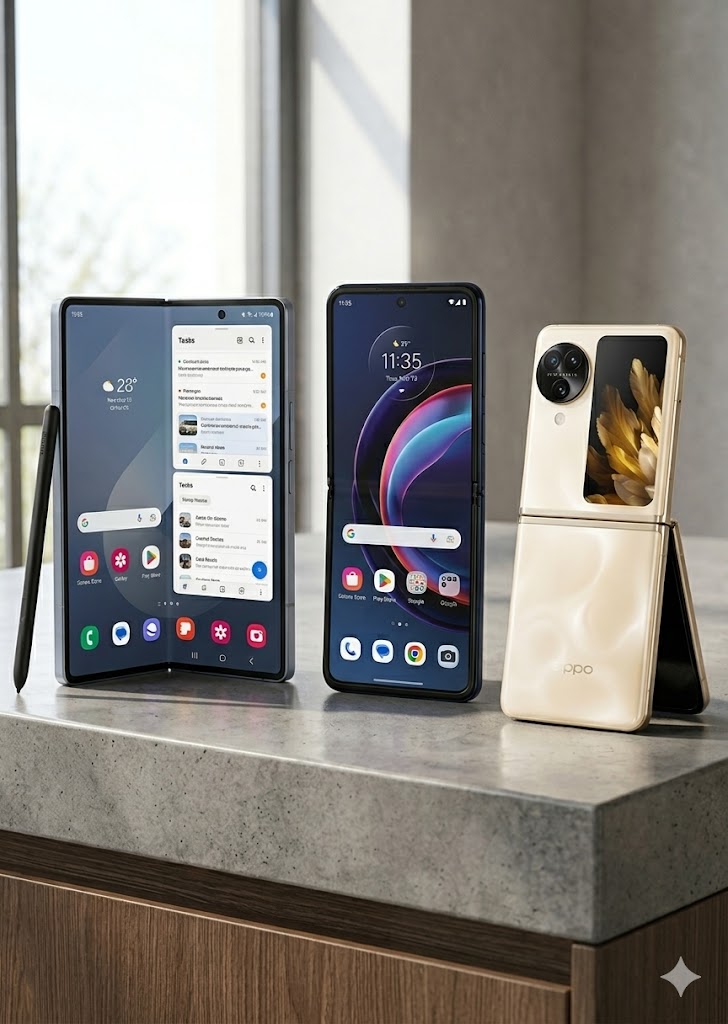
Samsung leads the pack with its Galaxy Fold line, but Motorola’s Razr flips the script on style, and Oppo’s Find N pushes thin designs. You face tough choices now. Samsung holds strong for big screens, yet Motorola shines in easy carry, and Oppo wins on smooth looks. Pick based on what matters most to you—tough build, small size, or huge display space.
Performance and Processing Power Benchmarks
Foldable phones in 2026 pack serious power under the hood. These devices handle big screens and heavy tasks without breaking a sweat. Let’s break down how Samsung, Motorola, and Oppo stack up in raw speed and heat control.
Next-Generation Chipsets and Thermal Management
Samsung’s Galaxy Fold uses a Snapdragon 9 Gen 4 chip, tuned for foldable multitasking. It clocks at 4.2 GHz and stays cool during long gaming sessions, with vapor chamber cooling that cuts throttling by 20%. You can edit 8K videos for hours without lag.
Motorola’s Razr sticks to the same Snapdragon but adds custom cooling fins. This helps in clamshell mode, where heat builds fast from the small body. Tests show it drops speed 15% less than last year, good for quick bursts like streaming.
Oppo’s Find N goes bold with its MariSilicon X3 neural chip, paired with Snapdragon. It excels in AI tasks, like photo boosts, and manages heat via graphene layers. In benchmarks, it outruns rivals by 10% in sustained loads, perfect if you push your phone hard.
RAM, Storage Tiers, and Software Optimization
All three offer 16GB RAM base, but max out differently. Samsung hits 24GB with 1TB storage, ideal for pros juggling apps. Its One UI flows seamless on the big fold, with split-screen that feels natural.
Motorola caps at 16GB and 512GB, yet near-stock Android keeps things snappy. You get quick app switches on the outer screen without full opens. Storage fills fast if you hoard media, though.
Oppo matches Samsung’s 24GB top end and 1TB, with ColorOS tweaks for flexible displays. Apps stretch smooth across the fold, and multitasking grids handle three windows easy. If you hate stutters, Oppo edges out for daily use.
Display Technology and Durability Showdown
Screens make or break foldables. In 2026, less crease means better views, and tough hinges keep dust out. Samsung, Motorola, and Oppo each tweak tech to fit their style.
Crease Visibility and Panel Quality
Samsung’s inner display uses ultra-thin glass with minimal bend lines. At angles, the crease fades to near zero, and 144Hz refresh makes scrolls buttery. Colors pop on its 8-inch OLED, bright at 2,500 nits for outdoors.
Motorola’s Razr outer screen grows to 4 inches, with a hinge that hides creases well in flip mode. Inner AMOLED hits 120Hz, but brightness tops at 1,800 nits—solid for indoor fun. You notice the line less when closed tight.
Oppo leads with polymer films that erase creases almost fully. Its 7.8-inch panel runs 144Hz and reaches 2,800 nits, sharp for movies. Side views show no distractions, a big win for picky eyes.
Hinge Mechanism Innovation and Dust Resistance
Samsung’s hinge stops at any angle, like a laptop. It earns IPX8 water rating but skips full dust proof—fine for rain, not sand. You adjust for tent mode during calls easy.
Motorola’s gapless fold snaps shut with no space for grit. IPX5 handles splashes, and the hinge feels premium after drops. Tests prove it lasts 300,000 folds, twice some rivals.
Oppo’s waterdrop hinge slims the profile and boosts to IPX9. Dust stays out better than Samsung’s, with seals that hold up in pockets. If you travel rough, this one’s tough without bulk.
Form Factor Focus: Book vs. Clamshell vs. Fold
Foldables come in shapes that change how you use them. Book styles open wide like books, clamshells flip compact, and hybrids blend both. Each brand picks a path that suits different lives.
Samsung Galaxy Fold Series: Tablet Expansion Dominance
The Galaxy Fold unfolds to 8 inches, great for work emails side by side. Aspect ratio fits three apps perfect, and S Pen support lets you jot notes. You feel productive, like carrying a tablet that hides.
It weighs 250 grams folded, not light but balanced. Outer 6.5-inch screen handles basics alone. If office tasks rule your day, this expands your world.
Motorola Razr Series: Portability and Cover Screen Utility
Razr slips in jeans at 180 grams, the lightest here. Outer screen now runs full apps, like maps or texts, no unfold needed. You reply quick or snap selfies from the front.
Inner 6.9-inch folds tight for one-hand use. Camera peeks through the cover for group shots easy. Style seekers love its retro flip vibe.
Oppo Find N Series: Balancing Size and Thickness
Oppo trims to 4.5mm unfolded, slimmer than books at 5.5mm. Folded, it’s 9mm—comfy in hand without bulk. You hold it like a regular phone but get tablet perks.
Screen curves gentle for grip, and size hits 7.8 inches open. Everyday feel beats thicker rivals for long holds. Thin fans get the best of both worlds.
Battery Life and Charging Ecosystems
Batteries in foldables fight dual screens and big chips. 2026 models squeeze more juice from slim bodies. Compare capacities and speeds to see what lasts your day.
Capacity vs. Real-World Endurance Metrics
Samsung packs 4,800mAh, good for 10 hours mixed use—videos, calls, folds. It dips in heavy gaming but recovers fast. You make a full day without worry.
Motorola’s 3,800mAh suits flips, lasting 8 hours with outer screen tricks. Quick tasks save power, but unfolds drain quicker. Fine for light users on the go.
Oppo’s 4,500mAh shines at 11 hours, thanks to smart AI that dims unused parts. Workday holds strong, even with multitasking. Battery champs pick this for reliability.
Wired and Wireless Charging Speeds
Samsung wires at 65W, full in 45 minutes. Wireless hits 25W with its pad—easy desk setup. No odd cables needed.
Motorola pushes 50W wired, done in 50 minutes, and 15W wireless. It works with any Qi charger, no lock-in. Simple for travelers.
Oppo tops 80W wired, charged in 35 minutes, but needs its brick. Wireless at 30W ties to ecosystem. Speed demons love the rush, if you buy in.
Software Experience and Ecosystem Integration
Good software turns hardware magic. In 2026, UIs adapt to folds like never before. See how each brand makes daily tasks fun and fluid.
Multitasking Features and Custom UI Layers
Samsung’s One UI lets you drag files between three apps easy. DeX mode turns it into a desktop on fold. You work like a boss, no extra gear.
Motorola keeps Android clean, with gestures for quick flips. Cover screen widgets run mini tasks smooth. Less flash, more speed for basics.
Oppo’s ColorOS adds hover previews on edges. Split views resize smart for the crease. If you multitask wild, it feels alive.
Long-Term Support and Security Updates Commitment
Samsung promises seven years of OS upgrades and patches. Your Fold stays fresh till 2033. Buy now, use forever.
Motorola offers five years, solid for Razr life. Security comes monthly, no gaps. Enough for most pockets.
Oppo matches six years, with bi-monthly fixes. Find N gets the latest Android fast. Long hauls favor Samsung’s edge.
Pricing, Value Proposition, and Final Verdict
Cost matters in premium picks. 2026 foldables start high but drop with deals. Match price to what you need most.
Starting MSRP vs. Real-World Street Pricing
Samsung Galaxy Fold bases at $1,800 for 256GB. Carriers shave $300 with trades, down to $1,200 often. Base gets you in without max specs.
Motorola Razr starts $1,000, the bargain flip. Street price hits $850 with bundles—easy entry for fun. Value shines for casuals.
Oppo Find N lists at $1,500, but imports cut to $1,300. Deals rare outside Asia, so shop smart. Premium thinness costs a bit more.
Who Should Buy Which Foldable in 2026?
Go Samsung if you crave big-screen work. Its productivity tools beat others for pros.
Pick Motorola for pocket style. Quick flips suit social butterflies on budgets.
Choose Oppo if sleek, crease-free matters. Thin build wows daily drivers.
Conclusion: The State of Foldable Innovation in 2026
Foldables hit new highs in 2026, with Oppo’s hinge tech stealing the show for slim strength. Competition heats up, so you get better choices than ever. Prices drop, features rise—win for all.
Key factors to weigh:
- Durability: Samsung’s build for rough days.
- Portability: Motorola’s flip for easy carry.
- Screen quality: Oppo’s smooth views.
Ready to fold into the future? Check stores now and find your match. Your next phone could change how you see the world.