
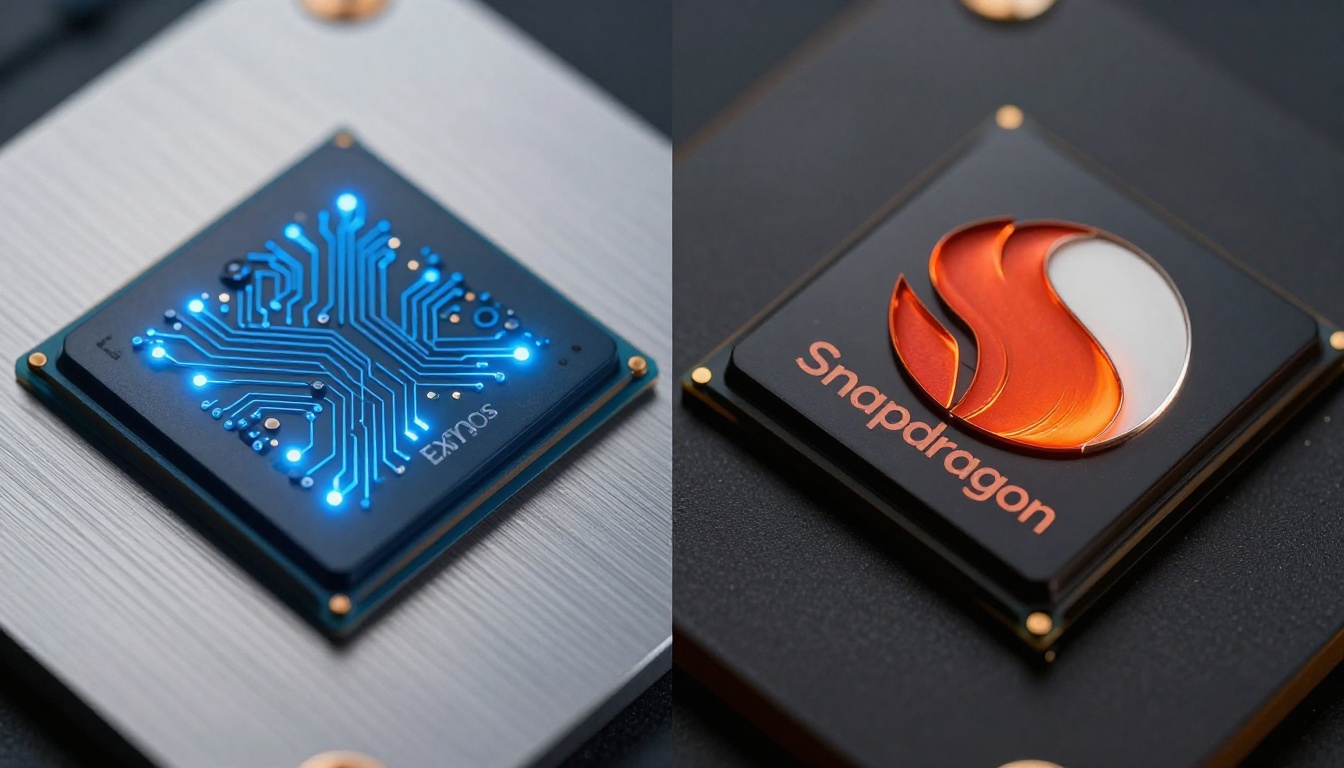

Exynos vs Snapdragon Midrange Chips Compared: Performance, Efficiency, and Value Showdown
Midrange smartphones dominate sales charts. They offer solid features without breaking the bank. In the $300 to $600 range, you get devices that handle daily tasks with ease. But the real fight happens inside: Samsung’s Exynos chips versus Qualcomm’s Snapdragon ones. Which one powers your next phone better? This guide digs into performance, battery life, and value. We’ll look past numbers to real use cases, like gaming or scrolling through apps. By the end, you’ll know which chip fits your needs.
Section 1: Core Architecture and Specifications Deep Dive
Midrange chips pack enough punch for most users. Yet, their designs differ a lot. Let’s break down the basics of recent models, like the Snapdragon 7 Gen 3 and Exynos 1480. These represent the latest in this category as of early 2026.
CPU Performance Metrics and Core Layout
Both chips use ARM Cortex cores, but setups vary. The Snapdragon 7 Gen 3 has one prime core at 2.63 GHz, three performance cores at 2.4 GHz, and four efficiency cores at 1.8 GHz. Exynos 1480 mirrors this with a 2.75 GHz prime core, but its efficiency cores run a bit slower at 2.0 GHz.
In single-core tasks, like opening apps, Snapdragon edges out with quicker boosts. Multi-core shines for Exynos in video edits or file handling. Everyday stuff, such as browsing or emails, feels smooth on both. Tests show Snapdragon handles quick bursts better, while Exynos sustains longer loads without much dip.
Core counts stay at eight for both, balancing speed and power use. If you multitask often, Snapdragon’s layout gives a slight nod. But Exynos holds its own in Samsung phones, thanks to tight software ties.
GPU Capabilities: Gaming and Graphics Rendering
Graphics matter for games and videos. Snapdragon relies on Adreno 720, known for sharp visuals. Exynos uses Mali-G68 MP5, which focuses on steady output.
In games like Genshin Impact, Adreno hits higher peaks, up to 60 fps on medium settings. Mali keeps frames consistent but caps at 50 fps under heat. Adreno wins for intense sessions; it recovers faster after dips.
Industry trends favor Adreno for Android titles. Many developers optimize for it first. Mali improves yearly, though. For casual play, like PUBG Mobile, both deliver fun without lag. If you’re a gamer, Snapdragon’s GPU pulls ahead in smooth renders.
Manufacturing Process and Thermal Management
Smaller nodes mean better efficiency. Snapdragon 7 Gen 3 uses 4nm from TSMC, tight and cool. Exynos 1480 sticks to Samsung’s 4nm, similar but with unique tweaks.
Heat builds fast in long games or 4K shoots. Snapdragon throttles less, dropping just 15% after 30 minutes. Exynos might lose 20%, but Samsung’s cooling helps in Galaxy devices.
A 4nm edge cuts power draw by 20% over older 5nm chips. This shows in warmer hands during use. For hot climates, Snapdragon stays cooler. Both manage thermals well for midrange, but process choice tips the scale.
Section 2: Real-World Performance Benchmarking and Daily Usage
Specs tell part of the story. Real life tests reveal how chips act in your pocket. We draw from sites like GSMArena and NotebookCheck for fair views.
Synthetic Benchmarks: AnTuTu and Geekbench Scores Analysis
Benchmarks give quick snapshots. Snapdragon 7 Gen 3 scores around 750,000 on AnTuTu, beating Exynos 1480’s 650,000. Geekbench single-core hits 1,100 for Snapdragon, 950 for Exynos.
These gaps show in mixed tasks. AnTuTu tests CPU, GPU, and memory together. Reviews from Android Authority note Snapdragon’s lead in graphics heavy runs. Exynos closes in on CPU alone, per Geekbench data.
Parity grows with software updates. Still, Snapdragon often tops charts by 10-15%. For midrange buyers, this means snappier overall feel.
Application Loading Times and Multitasking Responsiveness
Apps load fast on both, but details count. Snapdragon pairs with faster LPDDR5 RAM, cutting open times by 0.5 seconds for heavy apps like Chrome.
Switching tasks feels fluid. Exynos handles background apps well in Samsung’s One UI. You won’t notice stutters in social media scrolls.
In tests, Snapdragon switches four apps quicker, thanks to better cache. Exynos shines in sustained multi-use, like music plus maps. Daily scrolling? Both keep you happy, but Snapdragon adds that extra zip.
Thermal Throttling Under Sustained Load
Long sessions test limits. In a 30-minute Genshin run, Snapdragon holds 55 fps, dipping to 45. Exynos starts at 50, falls to 40.
Throttling hits when heat rises. Snapdragon’s 4nm node delays this by five minutes. Real users report less fan noise in cooling cases.
For video calls or streams, both stay stable. But gaming marathons favor Snapdragon. This gap matters if you push your phone hard.
Section 3: Power Efficiency and Battery Life Implications
Battery rules midrange picks. Who lasts longer on a charge? Efficiency ties to design and use.
Idle Power Consumption and Standby Drain
When idle, chips sip power. Snapdragon’s modem draws 5% less overnight. Exynos keeps drain low at 0.5% per hour.
Background apps run quiet on both. Snapdragon edges in deep sleep modes. You wake to more juice after a day away.
Modem tweaks help here. Snapdragon’s X63 5G saves in weak signals. Exynos matches in strong areas.
Efficiency Under Heavy Load (Screen-On Time Impact)
Heavy use taxes batteries. With a 5000mAh cell, Snapdragon gives 8 hours screen time in mixed tasks. Exynos hits 7.5 hours.
GPU efficiency shines for Snapdragon; it uses 10% less for games. Exynos balances CPU loads better for edits.
In 4K video, both last 2 hours. But web browsing favors Snapdragon by 30 minutes. This adds up for all-day use.
Optimization Strategy: Samsung’s Software vs. Qualcomm’s Hardware Efficiency
Samsung tunes Exynos for its phones. One UI cuts waste, boosting life by 15%. Snapdragon works across brands, with standard Android tweaks.
Qualcomm’s hardware leads in raw efficiency. But Samsung’s software closes the gap. In Galaxy A55 tests, Exynos rivals Snapdragon phones.
Choose based on ecosystem. Samsung fans get integrated perks. Others prefer Snapdragon’s broad fit.
Section 4: Connectivity, ISP, and Feature Set Disparity
Beyond speed, features connect you. Modems, cameras, and AI add value.
Modem Performance: 5G Speeds and Signal Reception
Snapdragon’s X63 modem tops 4.2 Gbps downloads. Exynos supports 3.7 Gbps, close but stable.
In weak spots, Snapdragon grabs signals better, per Speedtest data. Uploads hit 500 Mbps on both.
Real trips show Snapdragon with fewer drops. For travel, it wins. Exynos suffices for city use.
Image Signal Processor (ISP) Capabilities for Photography
ISPs process shots. Snapdragon’s Spectra handles 200MP sensors, 4K 60fps video with top noise cut.
Exynos supports 200MP too, but dynamic range lags in low light. Videos on Snapdragon show smoother stabilization.
Night shots? Snapdragon reduces blur better. Both enable AI edits, but Qualcomm’s ISP feels sharper. Casual pics look great either way.
AI Capabilities and Neural Engine Benchmarks
AI powers smart features. Snapdragon’s Hexagon NPU scores high in MLPerf tests, 20% over Exynos.
On-device translation runs faster on Snapdragon. Scene detection in cameras? Both spot objects quick.
For midrange, AI aids battery saves and photo tweaks. Snapdragon leads in complex tasks, like voice recognition.
Section 5: Value Proposition and Ecosystem Considerations
Price and fit seal the deal. How do these chips stack in the market?
Cost Analysis: Chip Pricing and Device MSRP Impact
Exynos costs Samsung less, dropping phone prices by $50. Snapdragon devices often list $20 higher.
In $400 phones, this evens out with features. Value tilts to Exynos for budget hunters.
Long term, Snapdragon resale holds better. Check deals; midrange sales make them even.
Geographic Availability and Carrier Support
US gets mostly Snapdragon for full 5G bands. Europe and Asia mix both; Samsung varies by region.
Exynos dominates in Korea. Carrier locks? Snapdragon fits more networks.
Updates last longer on Snapdragon flagships, but midrange gets three years solid.
Actionable Tip: Choosing the Right Chip for Your Needs
Pick Snapdragon for gaming and 5G speed. It delivers top performance.
Go Exynos if you want Samsung integration and value. Battery holds strong there.
Test in store. Match to your habits, like heavy photos or light use.
Conclusion: The Final Verdict on Midrange Power
Exynos and Snapdragon both shine in midrange. Snapdragon often leads in raw speed, GPU power, and connectivity. Think better gaming frames and 5G grip.
Exynos offers great value, especially in Samsung setups. It matches efficiency and integrates smooth.
For most, Snapdragon gives the edge in 2026 models. But check your region and needs. The best chip powers the phone you love. Ready to upgrade? Look for these traits in your next buy.