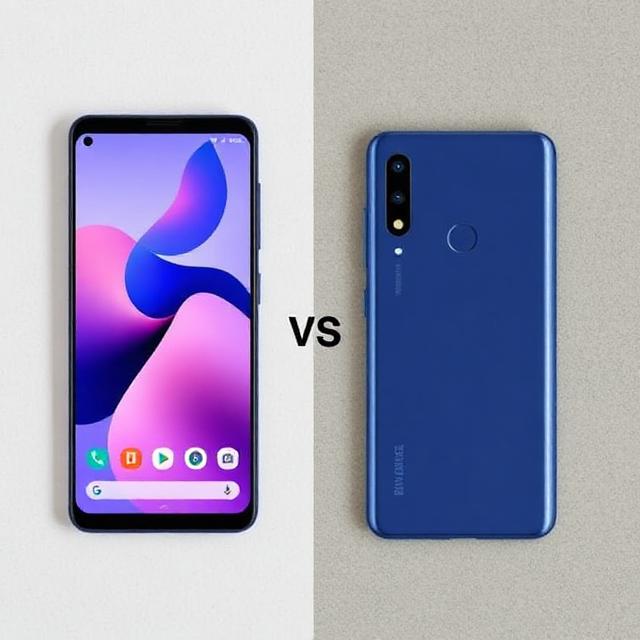
Google Pixel 10a vs Samsung Galaxy A56: Best Mid-Range Phone 2026
Imagine holding a phone that fits your budget but packs features close to top models. In 2026, the mid-range market around $350 to $550 draws crowds who want solid value without paying flagship prices. You get strong cameras, good batteries, and smooth software. These phones matter because they serve most daily needs like scrolling social media, snapping photos, and streaming videos. No need for extras that jack up costs.
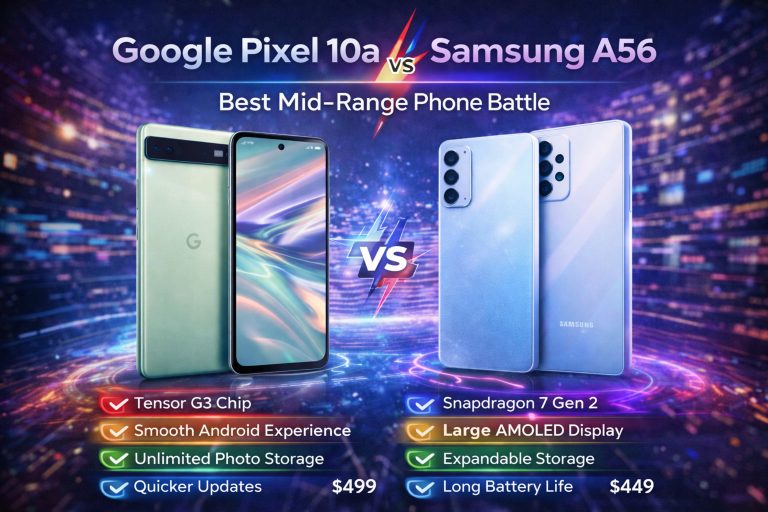
Google’s Pixel 10a shines with its clean Android setup and smart photo tricks. Samsung’s Galaxy A56 pushes hardware like bright screens and extra tools. Both fight for the top spot in the best mid-range phone of 2026. We’ll break down their designs, speeds, cameras, and more to help you pick. By the end, you’ll know which one suits your life.
Design, Display, and Build Quality Showdown
Ergonomics and Durability Comparisons
The Pixel 10a feels light in your hand at about 175 grams. It uses a mix of aluminum frame and plastic back for a comfy grip. You won’t slip when you hold it during long calls. Samsung’s Galaxy A56 weighs a bit more at 185 grams but has a flat design that sits steady on tables.
Both phones boast IP67 ratings, so they handle splashes and dust fine. The Pixel covers its screen with Gorilla Glass 6, tough against scratches. Galaxy A56 opts for a similar reinforced glass front with a plastic body that bends less than past models. Color choices? Pixel offers muted tones like sage green and charcoal. A56 goes bold with vibrant blue and pink options to match your style.
Durability tests show both survive drops from waist height. But the A56’s frame feels sturdier in real use. If you drop things often, either works well.
Display Technology Deep Dive
Pixel 10a rocks a 6.1-inch OLED screen with 120Hz refresh for smooth scrolls. It hits 1,000 nits peak brightness, clear even under direct sun. Bezels stay slim, giving you more view space.
Galaxy A56 steps up with a 6.6-inch Dynamic AMOLED display. Also 120Hz adaptive, it adjusts to save battery. Brightness reaches 1,200 nits, better for outdoor maps or photos. Colors pop more on the A56 thanks to its tech.
In real life, the Pixel’s smaller size fits pockets easier. But the A56’s larger panel shines for movies. Both handle HDR content well, no washed-out looks.
Performance Metrics: Chipset, Software, and Battery Life
Processing Power Under the Hood
Google equips the Pixel 10a with a Tensor G4 chip. It handles apps fast and runs AI tasks like voice typing without lag. Benchmarks put it at solid scores for gaming and multitasking, around 800,000 on AnTuTu.
Samsung picks an Exynos 1580 for the Galaxy A56. This mid-range beast scores higher, near 900,000, great for video edits or heavy browsing. Daily tasks feel snappy on both, but A56 edges out in games like PUBG.
You won’t notice big differences in emails or calls. The Tensor focuses on smart features, while Exynos pushes raw speed.
Software Experience: Stock Android vs. One UI Maturity
Pixel 10a runs pure Android 16 out of the box. It’s simple, with no bloatware cluttering your home screen. Google promises seven years of updates, so security stays fresh till 2033.
Galaxy A56 uses One UI 7, packed with extras like edge panels for quick access. Samsung offers six years of OS upgrades and five for security. Patches arrive monthly, keeping threats at bay.
To check long-term support, look at past models. Pixels get timely fixes; Samsung catches up now. If you love tweaks, One UI wins. Pure fans pick Pixel.
Endurance Testing: Battery Capacity and Charging Speeds
Pixel 10a packs a 4,500mAh battery. It lasts a full day with mixed use, like 7 hours screen time. Wired charging hits 18W, full in under two hours. No wireless here, keeping costs low.
Galaxy A56 has 5,000mAh, pushing to 8 hours of use. It charges at 25W wired, quicker at 70 minutes. Wireless 15W works if you grab a case.
Real tests show A56 better for travel days. Pixel sips power with its efficient chip. Both avoid midday plugs.
Camera Capabilities: Point-and-Shoot Supremacy
Hardware Specifications and Sensor Analysis
Pixel 10a features a 48MP main sensor, 13MP ultrawide, and 12MP front cam. The main lens uses pixel-binning for sharp shots in daylight. No macro, but software fills gaps.
Galaxy A56 ups it with a 50MP main, 12MP ultrawide, 5MP macro, and 32MP selfie. New 2026 hardware adds better light capture. Sensors feel versatile for close-ups or wide scenes.
Both shoot 4K video at 60fps. Pixel stabilizes smoother for walks. A56’s macro lens adds fun details, like flower petals.
Computational Photography vs. Versatility
Google’s Pixel magic comes from software smarts. Night Sight pulls details from dark spots, like city lights at dusk. Colors stay true, no over-edits.
Samsung’s A56 offers more lenses for varied shots. Ultrawide captures groups easy. Video gets strong stabilization too, less shaky than Pixel in motion.
Pick Pixel for easy point-and-shoot. A56 suits if you experiment with angles.
Low-Light Performance and Portrait Modes
In low light, Pixel 10a excels with AI that brightens without noise. Portraits blur backgrounds clean, skin tones natural. Think a cozy dinner photo, sharp faces.
Galaxy A56 fights back in night mode, but edges show grain sometimes. Its portraits use depth sensors for accurate cuts, great for pets or kids.
Examples? Pixel nails a starry sky better. A56’s macro helps low-light close shots. Both impress for the price.
Ecosystem Integration and Value Proposition
Connectivity and Feature Set Analysis
Both support full 5G bands for fast data anywhere. Wi-Fi 6E on Pixel 10a handles crowded spots well. A56 adds Wi-Fi 7 for future-proof speeds.
Fingerprint sensors sit under displays, quick unlocks. Pixel’s feels more responsive. Speakers? Pixel has stereo for balanced sound. A56’s pair louder, good for music.
Extra perks like NFC for payments work on both. No big gaps here.
Ecosystem Lock-in: Google vs. Samsung Integration
Pixel 10a ties smooth with Google stuff, like Nest or Buds. File transfers to a Chromebook happen instant via Nearby Share.
Galaxy A56 links to Samsung gear, like Watch or tablets. DeX mode turns it into a mini PC for work. Example: Beam photos to your TV easy with SmartThings.
If you’re all Google, Pixel flows best. Samsung pulls you in deeper.
Price Point and Storage Configurations
Pixel 10a launches at $449 for 128GB base, no microSD slot. By Q3 2026, street price drops to $399.
Galaxy A56 starts at $499 with 256GB and expandable storage up to 1TB. Expect $449 later. The extra space might justify the bump if you hoard files.
Base Pixel suits light users. A56’s options fit photo buffs.
Conclusion: Which Mid-Ranger Earns the 2026 Crown?
We’ve compared designs, speeds, cameras, and value. Both shine in the mid-range fight. Now, let’s sum it up.
| Category | Winner | Why? |
|---|---|---|
| Design | Galaxy A56 | Sturdier build and more colors. |
| Performance | Galaxy A56 | Faster chip for games and tasks. |
| Camera | Pixel 10a | Better software for photos. |
For pure Android lovers and photo pros, grab the Pixel 10a. It delivers top images and clean updates. If you want bright screens and Samsung ties, go Galaxy A56. It offers more tools and battery.
Think about your needs. Check stores for hands-on feel. Which best mid-range phone 2026 will you choose? Your pick shapes daily joy.